
Last updated November 15, 2026
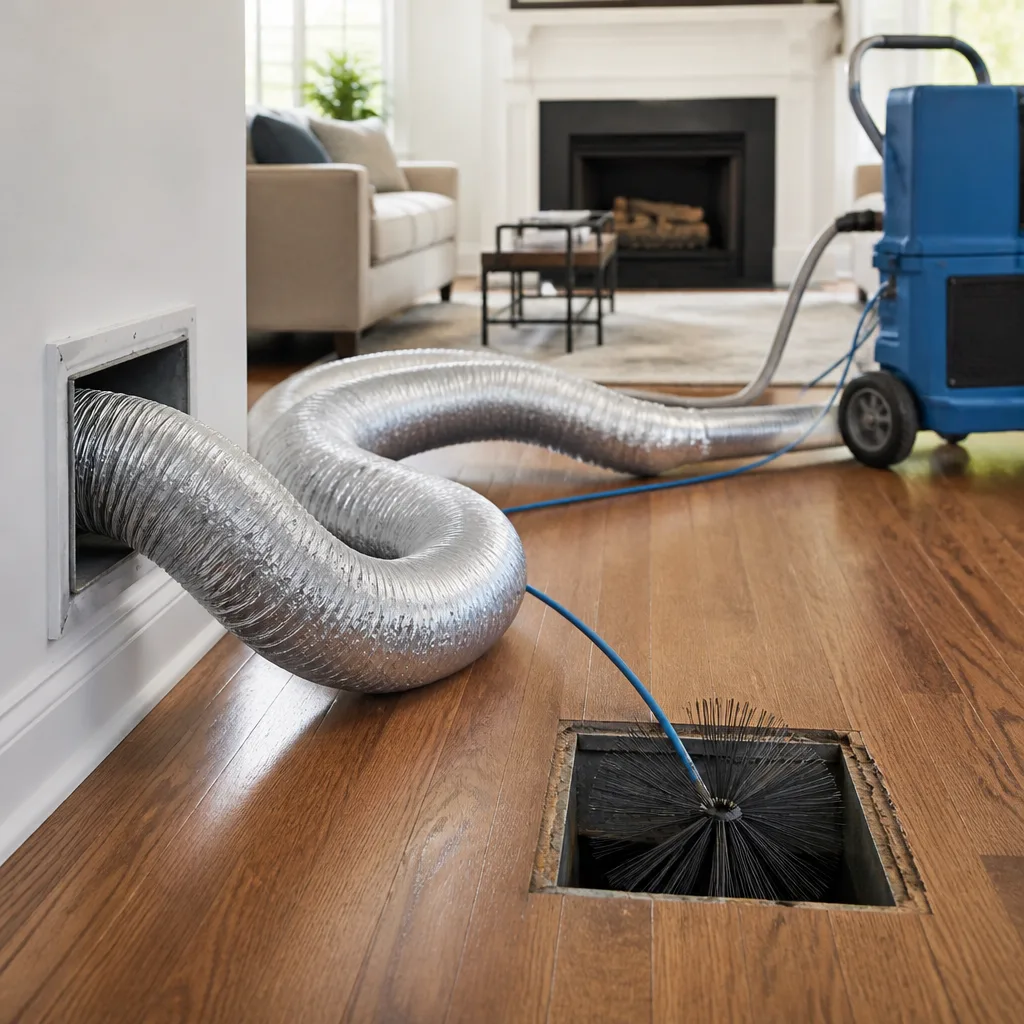 Whole-home duct cleaning
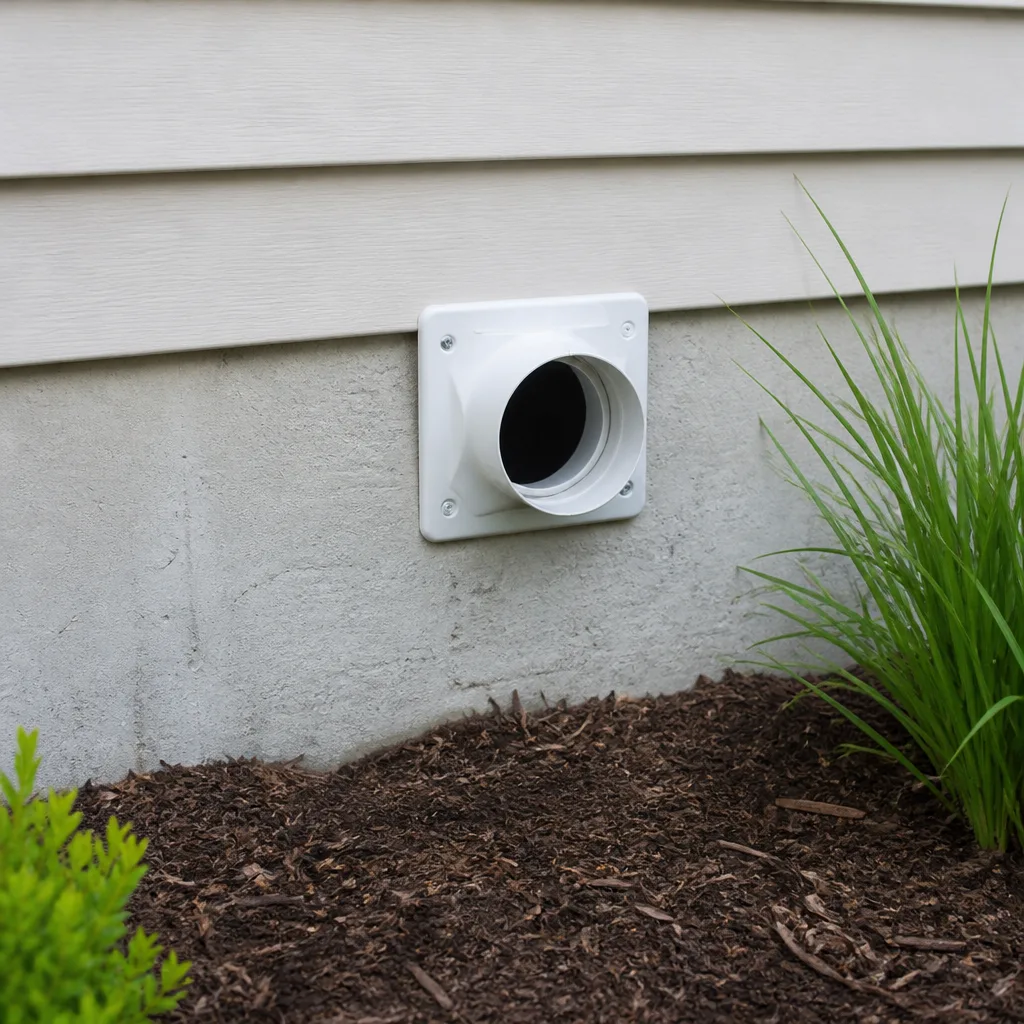 Dryer vent cleaning
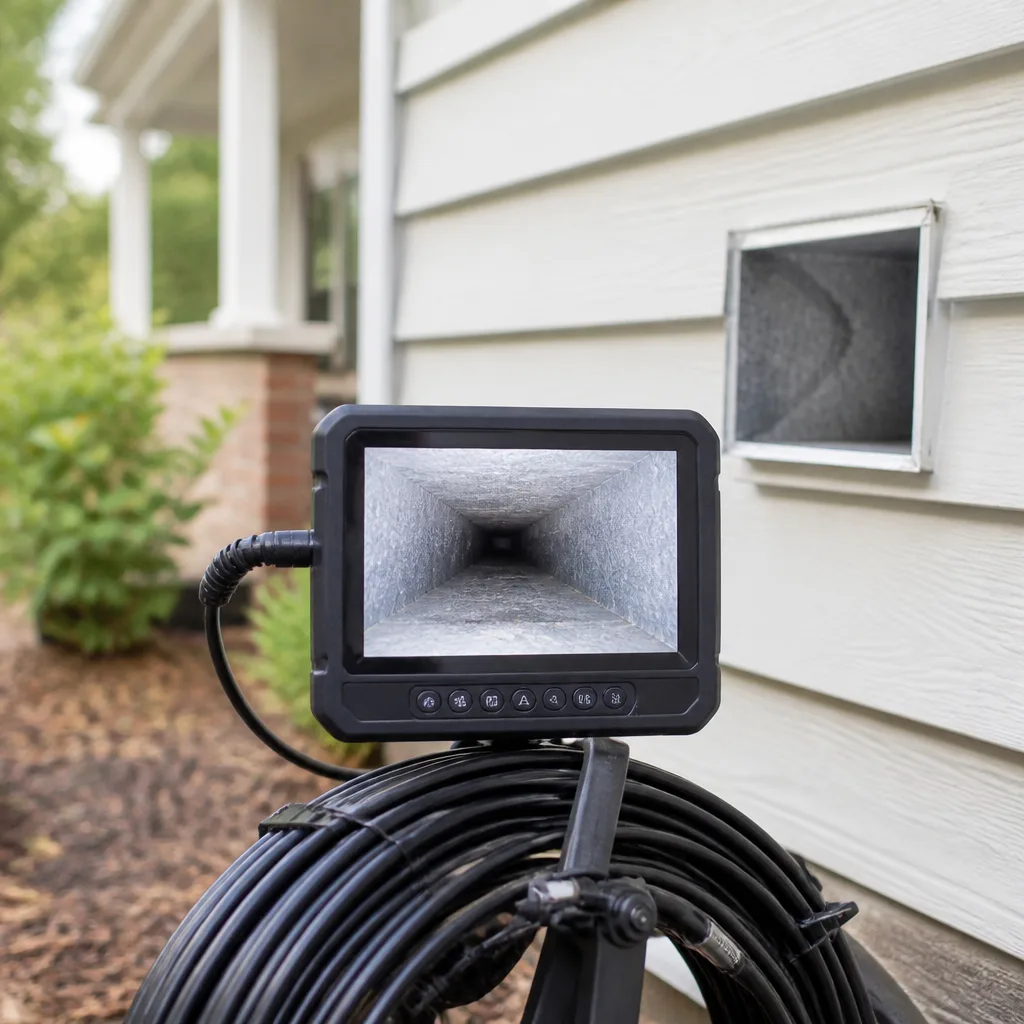 Camera inspection
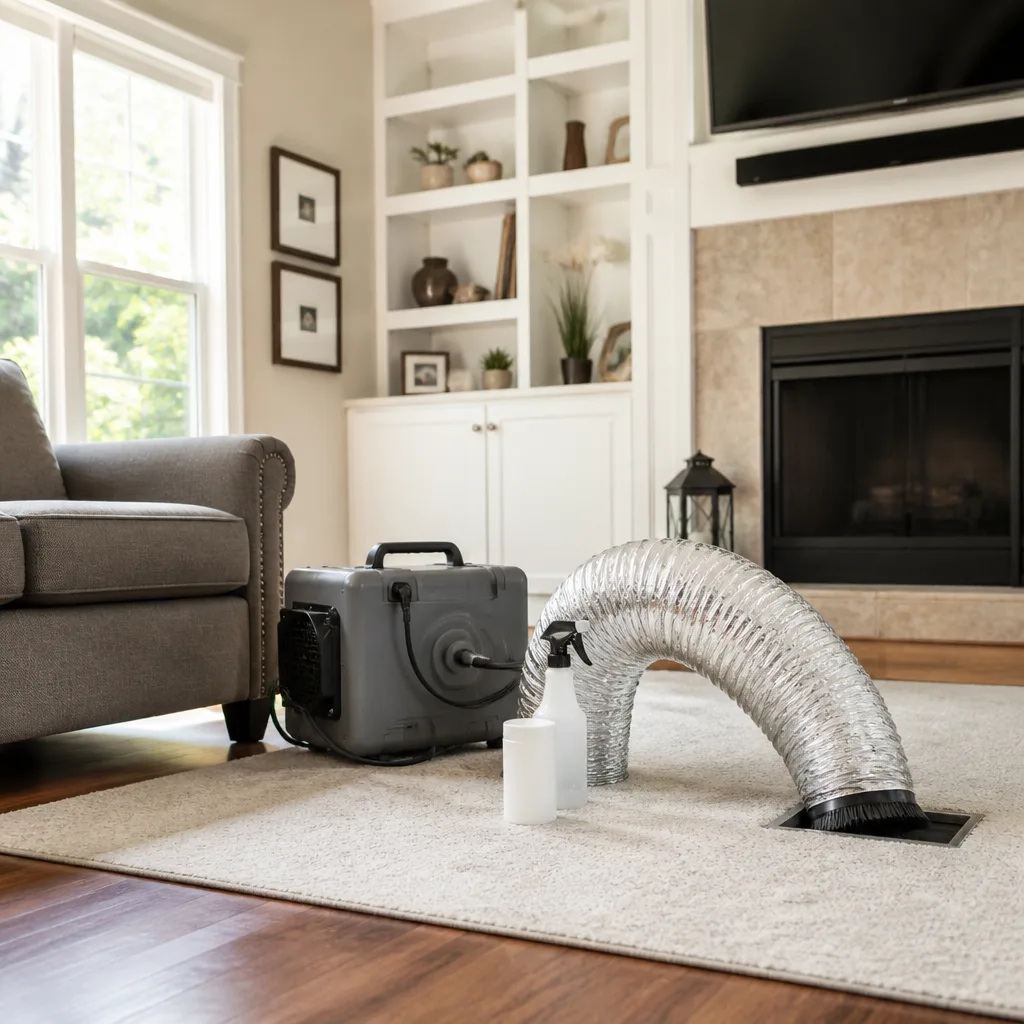 Sanitizing & deodorizing
Whole-system duct and dryer vent check with before-and-after photos - you see exactly what came out of your vents
That "$99 whole-house special" is a bait ad - the real number appears once they are in your hallway, or the "clean" is a shop-vac at the register. We photograph the inside of your ducts before and after instead.
How to Hire an Air Duct Cleaning Contractor in Norfolk: A Step-by-Step Guide
Most homeowners assume the hard part of hiring a duct cleaning contractor is finding someone who’ll show up. The harder part is filtering out the operators who show up with a shop vac, run a hose through a couple of vents, and hand over an invoice before anyone can check the work. Here’s the uncomfortable truth about Virginia: there is no licensing requirement specific to duct cleaning. Anyone who can print a business card can call themselves a duct cleaning professional. That means the burden of screening falls on you. This guide walks you through exactly what to ask, what the answers should sound like, and how to spot the difference between a contractor equipped for the job and one who isn’t. You’ll learn the equipment questions that separate serious operators from pretenders, how to verify insurance in Norfolk, and why a cheap whole-house quote is usually a warning rather than a bargain.
Quick Answer
To hire an air duct cleaning contractor in Norfolk, verify four things before you book: the specific vacuum and agitation equipment they use (not just “professional equipment”), proof of general liability and pollution/contaminant coverage, whether they perform a camera inspection before quoting, and whether they price by the whole system rather than per vent. A legitimate contractor will answer all four without hesitation and put the price in writing before work begins. If any answer is vague, move to the next name on your list.
Styles & brands we work with
- Whole-home duct cleaning
- Dryer vent cleaning
- Camera inspection
- Sanitizing & deodorizing
Table of Contents
- Why Virginia’s licensing gap matters for Norfolk homeowners
- The equipment questions that reveal contractor quality instantly
- What NADCA membership actually verifies (and what it doesn’t)
- Red flags in pricing: why a $200 whole-house quote doesn’t add up
- How to verify insurance in Virginia the right way
- What a legitimate pre-cleaning inspection looks like
- The dryer vent question most homeowners forget to ask
- The full screening process, step by step
Why Virginia’s licensing gap matters for Norfolk homeowners
Virginia regulates plenty of trades. Electricians, plumbers, and HVAC contractors all carry state licenses through the Department of Professional and Occupational Regulation. Duct cleaning itself is not a separately licensed trade in the Commonwealth. A contractor holding an HVAC license may or may not have the equipment to clean ducts properly, and someone with no license at all can legally hang out a duct cleaning shingle. That gap is the single biggest reason this guide exists.
What the gap means in practice is that your screening has to substitute for a licensing board. Nobody is going to check this contractor’s equipment or methods on your behalf. You’re the inspector. That’s not as intimidating as it sounds once you know what to look for, and it explains why the questions in the next sections matter more than the ones homeowners usually ask.
Norfolk makes this a little more complicated because the housing stock is so varied. A 1920s Ghent bungalow, a mid-century home near Wards Corner, and a newer build out in East Beach can have very different duct layouts, duct materials, and contamination profiles. A contractor who’s only ever worked on flex-duct suburban installs may not know what to do with the rigid galvanized ductwork common in older Norfolk homes. Part of your screening is asking whether they’ve worked on your type of system before, and listening for a specific answer rather than a confident nod.
One more Norfolk-specific wrinkle: this region’s humidity is a real factor in duct condition. Ducts that run through unconditioned spaces here see wide swings between sticky summers and damp winters, and that cycling can loosen joints, degrade sealant, and create the conditions for debris to collect at low points. That doesn’t mean every Norfolk home needs cleaning, but it does mean you want a contractor who understands how this climate affects ductwork, not someone working from a script written for Phoenix. If you want a refresher on what cleaning actually involves before you start screening, our overview of air duct cleaning covers the basics.
The equipment questions that reveal contractor quality instantly
Equipment is the fastest way to separate real duct cleaners from operators who added duct cleaning to their service list because it looked easy. The specific questions below have answers that either demonstrate a contractor knows their trade or expose that they don’t. Ask them before you book.
1. What’s the CFM rating of your vacuum, and what does it pull at the working end of the hose?
Duct cleaning vacuums are rated in cubic feet per minute (CFM). The number that matters isn’t the one on the marketing brochure, it’s the airflow at the point where the hose meets your ductwork. A serious contractor knows their machine’s working CFM because they chose the equipment for exactly that reason. A shop vac pulls a few hundred CFM at best under ideal conditions and far less through a long hose. Professional duct cleaning vacuums are built to maintain negative pressure across a whole system so that dislodged debris goes into the machine instead of back into your living room. If the answer is “it’s a really strong vacuum,” that’s not an answer.
2. What brush or agitation system do you use?
A vacuum alone won’t loosen debris stuck to duct walls. You need mechanical agitation, and the type matters. Rotary brush systems use a spinning brush head on a flexible shaft to scrub duct interiors while the vacuum pulls debris out at the same time. The brand names tell you something, which is why we mention ours: we use the Rotobrush rotary brush system for agitation and extraction, and Nikro HEPA-filtered vacuums to keep debris from cross-contaminating other parts of the home. Ask your contractor to name their system. If they can’t, they may be relying on compressed air or a bare hose, neither of which actually cleans duct surfaces.
3. Do you use negative air containment, and which system?
This is the question that separates duct cleaners from remediation-grade operators. Negative air machines and containment barriers keep a work area under slight negative pressure so dust and contaminants are captured rather than pushed into the room. It’s the same category of tool used in professional mold and asbestos remediation. We use Abatement Technologies containment and negative-air equipment, and we’re not the only contractor who does, but plenty of duct cleaners skip this step entirely because it’s expensive and slows the job down. If a contractor looks puzzled by the term, that tells you what you need to know.
4. Can you show me the inside of my ducts with a camera before and after?
Camera inspection capability is a real differentiator. A contractor with a duct camera can show you what’s actually in your system before cleaning and what it looks like afterward. Without cameras, you’re relying entirely on the contractor’s word. Ask to see before-and-after photos or video of your own ducts. A contractor who does this as standard practice will say yes immediately.
What NADCA membership actually verifies (and what it doesn’t)
The National Air Duct Cleaners Association (NADCA) is the trade body for this industry, and it publishes a well-known standard (ACR, the Assessment, Cleaning and Restoration standard) that a lot of serious contractors follow. NADCA membership is worth asking about, but it’s not the seal of approval many homeowners assume it is. Understanding what membership means will help you weigh it correctly.
What NADCA membership signals:
- The contractor has chosen to affiliate with the industry’s main professional body, which suggests they take the trade seriously.
- They’ve likely been exposed to NADCA’s standards and best practices for assessment, cleaning, and restoration.
- Individual technicians may hold NADCA certifications such as ASCS (Air Systems Cleaning Specialist) or CVI (Certified Ventilation Inspector).
What NADCA membership doesn’t guarantee:
- It doesn’t verify that the contractor actually owns the proper equipment. Plenty of NADCA members are excellent; a few are not, same as any trade body.
- It doesn’t replace your own verification of insurance and business registration.
- It doesn’t tell you whether this particular contractor has experience with your type of ductwork or your type of home.
Treat NADCA membership as a positive signal worth a point in the contractor’s favor, not as a reason to skip the rest of your screening. Ask follow-up questions: which certifications do your technicians hold, and how often do you attend NADCA training? The answers tell you more than the membership badge alone. For Norfolk homeowners comparing contractors, the combination of NADCA affiliation plus specific equipment answers plus verifiable insurance is what you’re aiming for.
Red flags in pricing: why a $200 whole-house quote doesn’t add up
Duct cleaning has a well-earned reputation problem, and pricing is at the center of it. The classic bait-and-switch model works like this: advertise an extremely low headline price (often under $100 or $200) that covers only a small portion of the work, then arrive, declare that your ducts are “much worse than expected,” and present a much higher bill on the spot. Homeowners who’ve already committed time and allowed a technician into the home often feel pressured to say yes. The number you were quoted and the number you pay bear no relationship to each other.
Here’s the math that makes a genuinely low whole-house quote implausible. A proper whole-house duct cleaning requires several hours of skilled labor, a rotary brush system, a high-CFM vacuum, and often containment equipment. That’s before you account for insurance, training, and travel. A price under $200 for a whole home simply can’t cover that work at a fair wage. When you see it, you’re looking at one of three things:
- A teaser price that excludes most of what you actually need. The quoted number may cover one or two vents, or “up to 10 vents,” with the rest billed as extras.
- A per-vent model that inflates as work progresses. The contractor quotes a low base and charges per vent or per system, and the final bill balloons.
- A contractor without the equipment to do the job properly. They’ve priced the work at what a shop vac and a hand brush can accomplish, and that’s what you get.
The right pricing model is a whole-system price, in writing, agreed before any work starts. We quote a flat price per system, no per-vent charges, and the written estimate sets the final price. Ask every contractor you talk to whether their quote covers the entire system or only part of it, and get the answer in writing. For a fuller look at the typical price bands in this market, see our air duct cleaning cost guide – prices depend on system size and accessibility, but the structure (whole-system, in writing, no surprises) is what you’re shopping for.
How to verify insurance in Virginia the right way
Any contractor should carry general liability insurance. For duct cleaning, though, general liability alone isn’t enough. You need to confirm two separate coverage types, and you need to verify them rather than take someone’s word for it.
General liability: the baseline
General liability covers damage the contractor causes to your home while working. It won’t cover injuries to their own workers (that’s workers’ comp, which you should also ask about, especially if they’re bringing more than one person into your home). Ask for a certificate of insurance and call the insurer’s number on the certificate to confirm the policy is active. A legitimate contractor will have this ready; the fact that they have it doesn’t mean they’re great at duct cleaning, but the absence of it is disqualifying.
Pollution/contaminant coverage: the one most homeowners miss
Duct cleaning disturbs whatever is inside your ducts. If that work releases contaminants into the home and a homeowner later claims a health issue or property damage, standard general liability policies often exclude the claim as a “pollution” event. That’s why serious duct cleaning contractors carry pollution or contaminant coverage as a separate policy. Ask specifically: “Do you carry pollution or contaminant liability coverage, and can you show me the certificate?” Many contractors won’t have it because it isn’t cheap and it isn’t required. The ones who do have it are, in general, the ones who take their work seriously enough to protect the customer against exactly the risks their work creates.
Beyond insurance, verify that the business is registered with the Virginia State Corporation Commission, and ask for a physical business address. If a contractor doesn’t have a verifiable business footprint, or the only contact method is a cell phone and a Gmail address, that’s a meaningful signal about how they’ll handle a problem after the job is done.
What a legitimate pre-cleaning inspection looks like
No serious duct cleaning contractor cleans a system they haven’t inspected. If a contractor quotes you a system-wide price over the phone, sight unseen, that’s a disqualifier. Not because the price is necessarily wrong, but because it means the quote isn’t based on anything. The inspection is where the contractor learns what kind of system you have, whether it needs cleaning at all, and whether there’s damage that a cleaning won’t address.
A proper pre-cleaning inspection covers:
- System identification. Rigid galvanized duct versus flex duct versus ductboard, and what that means for cleaning methods.
- Access point mapping. Where the registers are, where the return is, and where the contractor will cut access holes if needed (and how they’ll seal them afterward).
- Camera inspection of the trunk and branch lines. Visual confirmation of what’s in the system, not just an eyeball look at the return grille.
- Condition check for damage. Loose joints, disconnected sections, crushed flex duct, and gaps that cleaning alone won’t fix.
- Assessment of debris type. Construction dust from a remodeling project, normal household accumulation, or signs of moisture intrusion all call for different responses.
- Written scope and price. What will be cleaned, how, and what it costs, before any work starts.
Ask about Duct Cleaning Norfolk if you’re in the area and want a walk-through of what this inspection looks like in your home. The inspection is also your chance to find out whether duct cleaning is even necessary. If the answer is “your ducts look clean, save your money,” that’s the answer you should hear, not a pitch. A contractor who tells you cleaning isn’t needed and explains why is a contractor you can trust with the next job. While the technician is inspecting, ask about the dryer vent as well – a related but separate system that matters for safety (more on that below).
The dryer vent question most homeowners forget to ask
Most duct cleaning quotes cover HVAC ducts only. That’s a gap, because the dryer vent is a separate ducting system with a much more serious risk profile. Lint accumulation in a dryer vent is a leading cause of residential fires, and it’s a problem that builds silently over years. A dryer that takes longer and longer to dry a load is often signaling restricted airflow through a clogged vent, not a dying appliance.
When you’re screening duct cleaning contractors, ask whether they clean dryer vents as a dedicated service or as an add-on. Here’s what to listen for:
- Dedicated dryer vent service. They bring the specific tools for dryer vents (long brushes, vacuum attachments sized for the duct interior) and run the vent from the dryer end to the exterior termination. Some will inspect the exterior flap to confirm airflow after cleaning.
- Treated as an afterthought. They attach the shop vac to the vent for thirty seconds and call it done. That’s not cleaning; it’s a gesture.
- Pricing per system. A legitimate dryer vent cleaning is priced on its own, based on run length and accessibility, not bundled into the HVAC price as a cheap add-on.
Given how many Norfolk homes have long or winding dryer vent runs (particularly where the dryer sits against an interior wall and the vent has to travel to a far exterior wall), it’s worth asking whether the contractor carries the equipment for extended runs. If a dryer vent has never been cleaned and the home is more than a few years old, it’s worth having it checked regardless of the HVAC duct situation. You can read more about our dryer vent cleaning service if you want to understand what the job involves; the point for screening purposes is simply that a contractor who treats this as a real service is generally a contractor running a real operation.
The full screening process, step by step
Here’s the whole process in order, from first search to signed estimate. Work through it in sequence and you’ll have filtered out most of the field before anyone sets foot in your home.
- Build a list of three to five contractors. Look for verifiable business presence: a physical address, a real website with service details, and reviews that mention specific work rather than generic praise. If the only contact info is a cell phone, cross them off.
- Check NADCA affiliation. The NADCA contractor locator will tell you who in the area is a member. Note it as a plus, not a decision.
- Ask the four equipment questions. CFM rating at the working end of the hose, brush system type and brand, negative air containment, and camera inspection capability. Score each answer: specific and confident is a point, vague is a strike.
- Ask about insurance in two parts. General liability (with certificate) and pollution/contaminant coverage (with certificate). Call the insurer to verify both are active.
- Ask about their experience with your system type. Rigid metal duct in a 1920s home versus flex duct in a newer build. Listen for specifics.
- Book a pre-cleaning inspection. The inspection should be free, no-pressure, and include a written scope of work. Anyone who quotes over the phone without inspection is out.
- Get the price in writing. Whole-system, not per-vent. Ask explicitly: “Is this the final price, or could it change during the work?” The correct answer is that the written estimate sets the final price.
- Confirm what happens after. Before-and-after photos or video of the ducts, and a clear statement of any issues found that a cleaning won’t solve (loose joints, damaged duct sections).
The whole process takes a couple of phone calls and one inspection. It’s a half-day of effort that determines whether you spend a few hundred dollars on a job done right or lose that money and have to start over. If you’re in Norfolk and want to start with the inspection, our team can walk your system with you. We don’t just clean what’s there; we also offer air duct repair as a standalone service when the inspection turns up damage that a cleaning alone won’t fix, so the fix stays with one contractor instead of a second call to someone else.
Common Mistakes to Avoid
- Hiring on price alone. The lowest quote in Norfolk is almost always a teaser that grows once work begins. Compare scope and structure, not just the headline number.
- Skipping the pre-cleaning inspection. If a contractor is willing to quote you a system-wide price without ever seeing your system, they’re either guessing or planning to inflate the bill later. Either way, that’s not a contractor you want.
- Accepting a verbal price. A written estimate, describing exactly what will be cleaned and for what price, is the only protection you have. Nothing agreed on the phone is binding.
- Not verifying insurance for real. Looking at a piece of paper isn’t verification. Call the insurer’s number on the certificate. Many duct cleaning “contractors” in the Norfolk market operate without pollution/contaminant coverage because it’s expensive and not legally required; ask specifically.
- Forgetting the dryer vent. It’s a separate system from the HVAC ducts and a separate fire risk. A contractor who treats it as an afterthought is telling you something about their approach to the HVAC job too.
- Not asking for evidence of the work. Before-and-after photos or video of your own ducts should be standard. If you can’t see what was done, you’re relying entirely on trust, and this industry hasn’t earned that by default.
- Assuming cleaning will fix duct damage. Loose joints, disconnected sections, and crushed flex duct are repair problems, not cleaning problems. A contractor who doesn’t distinguish between the two will clean around the damage and leave the underlying issue in place.
See the difference
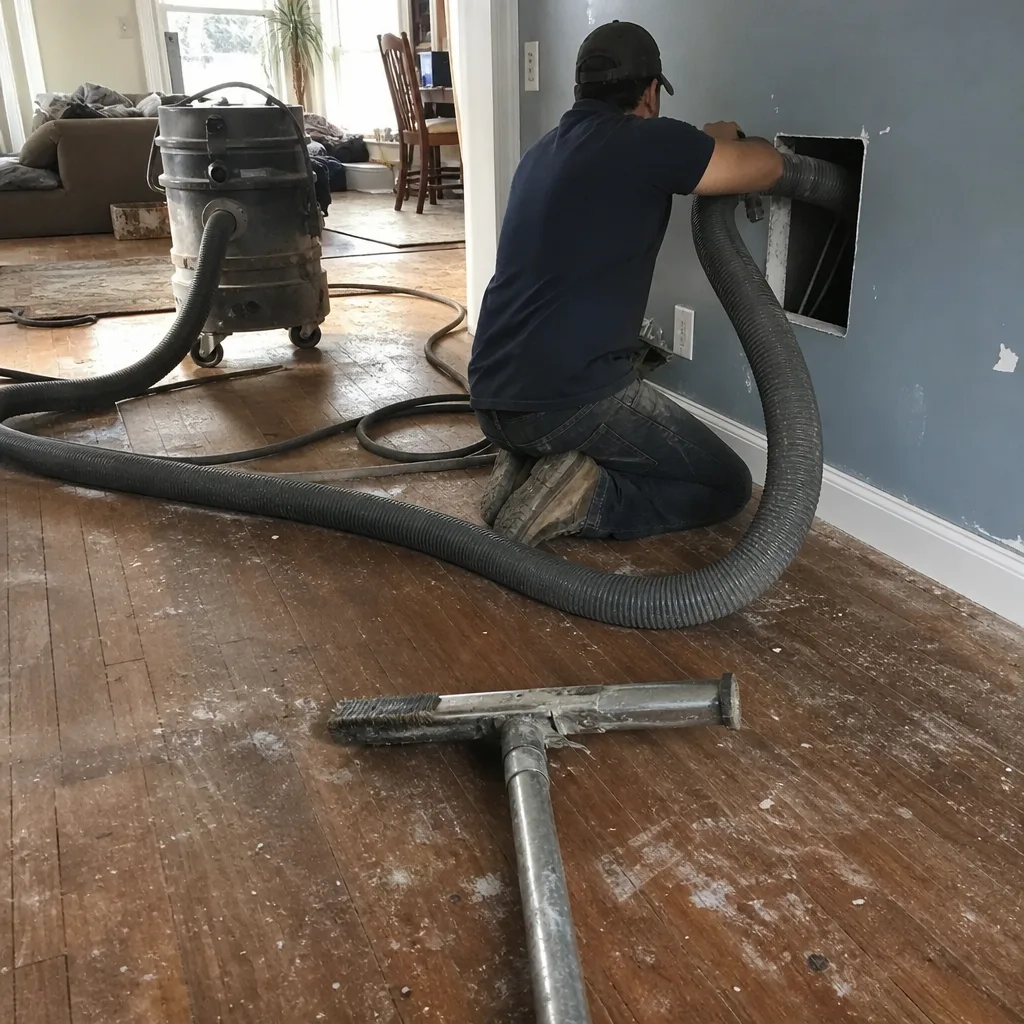 Before
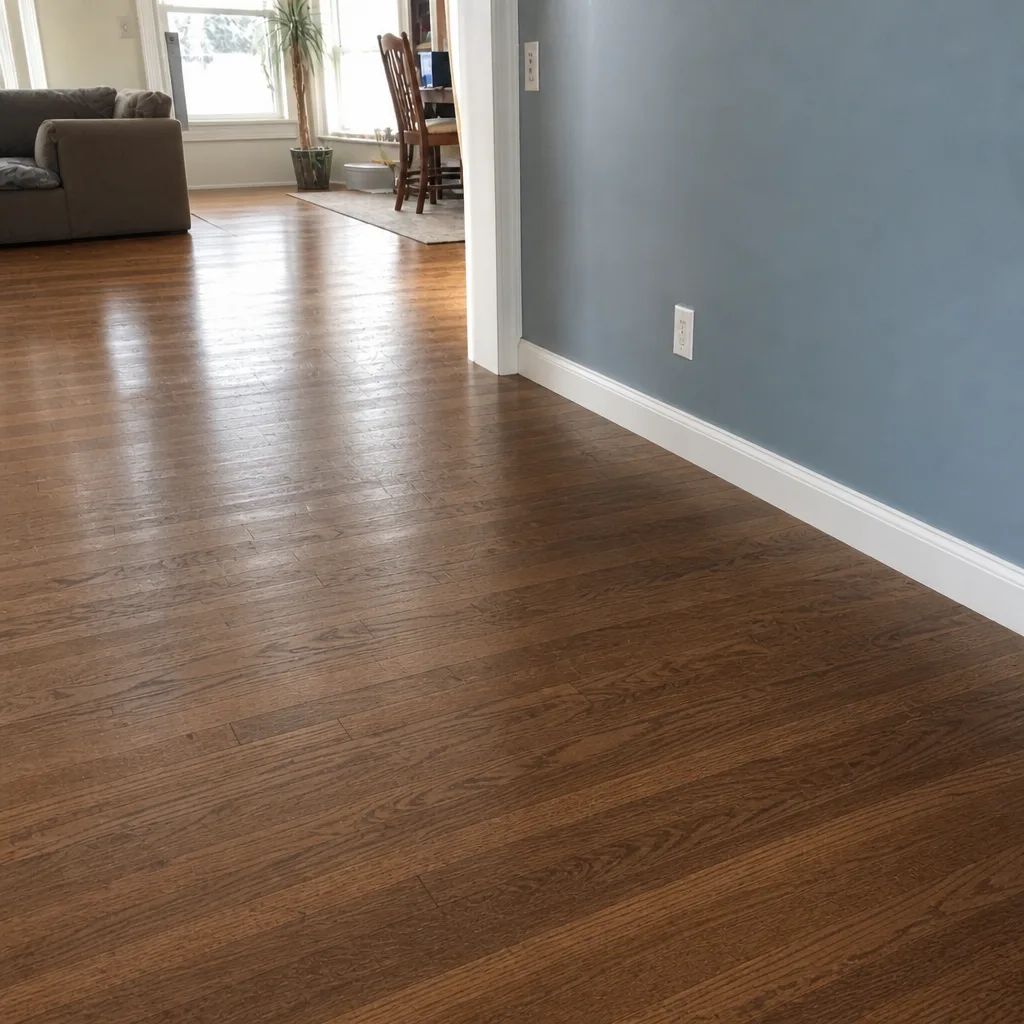 After
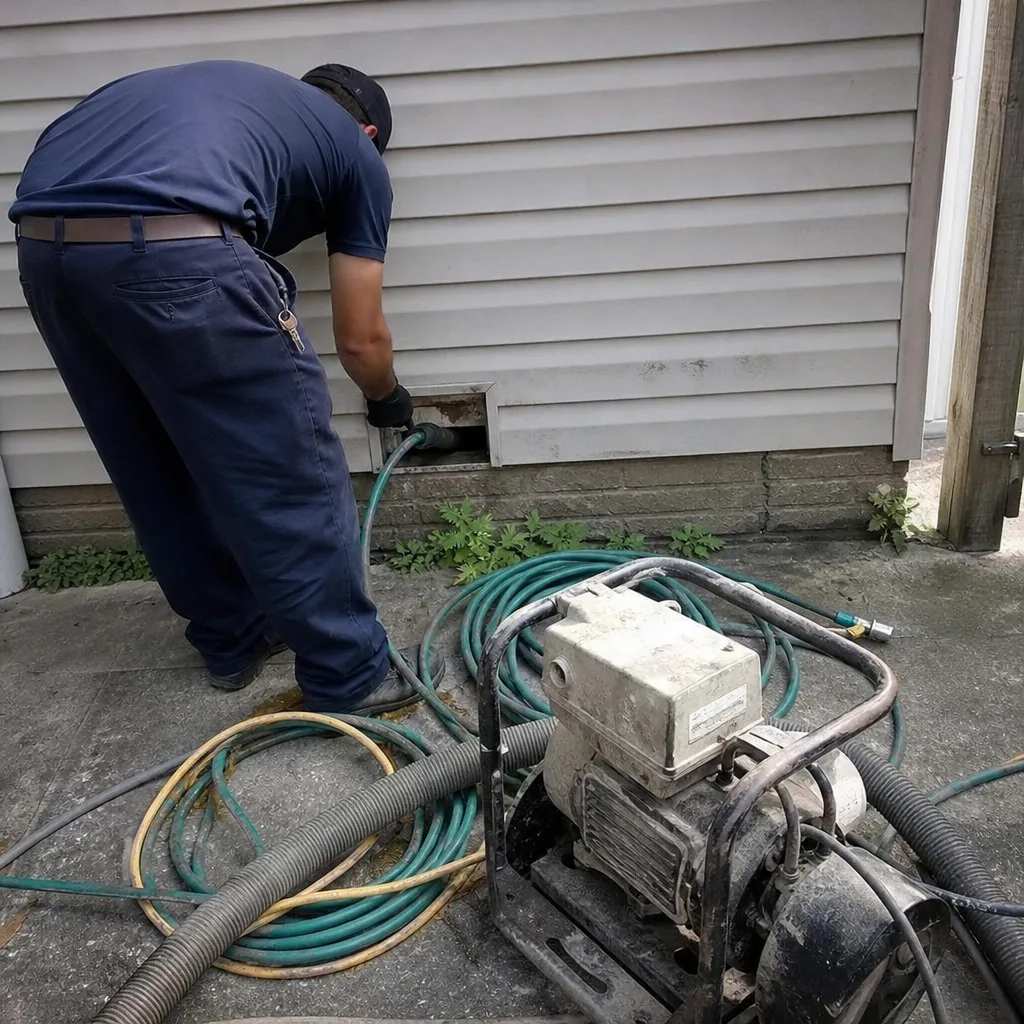 Before
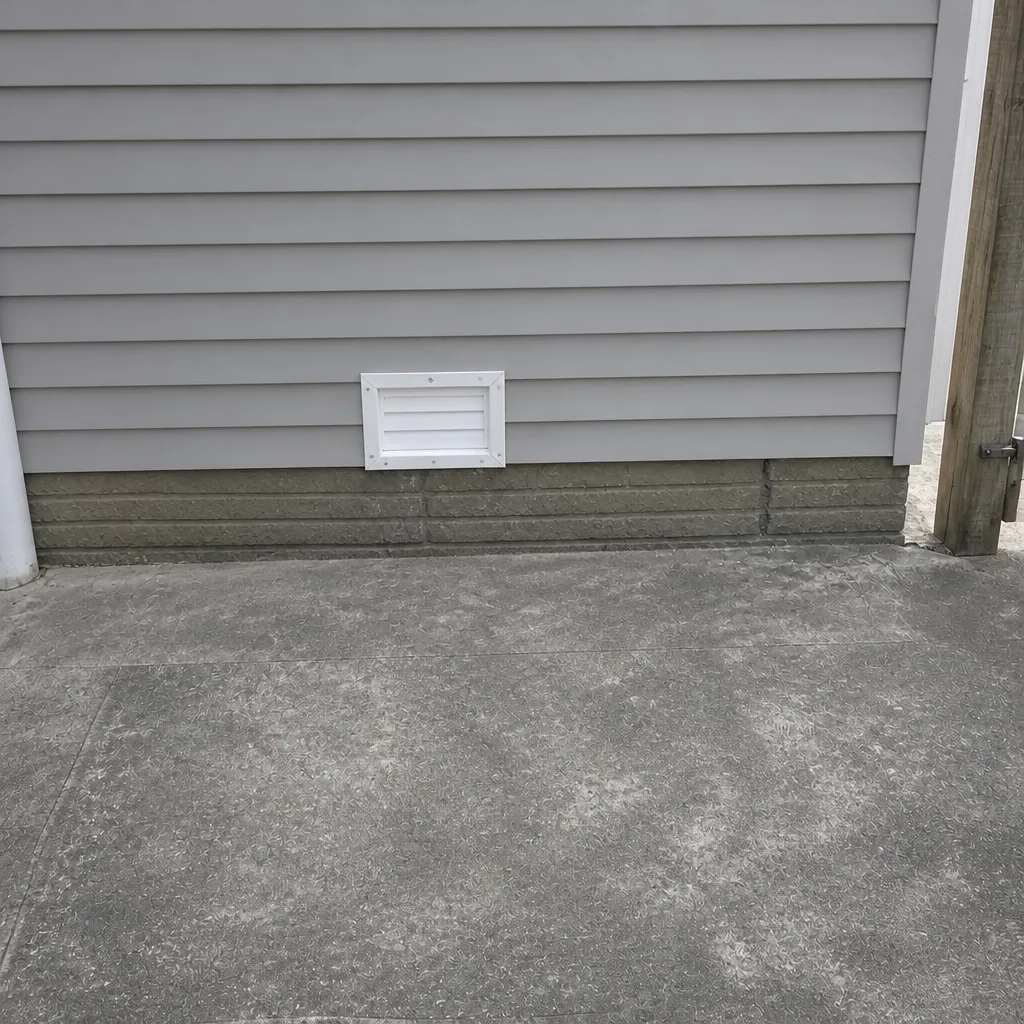 After
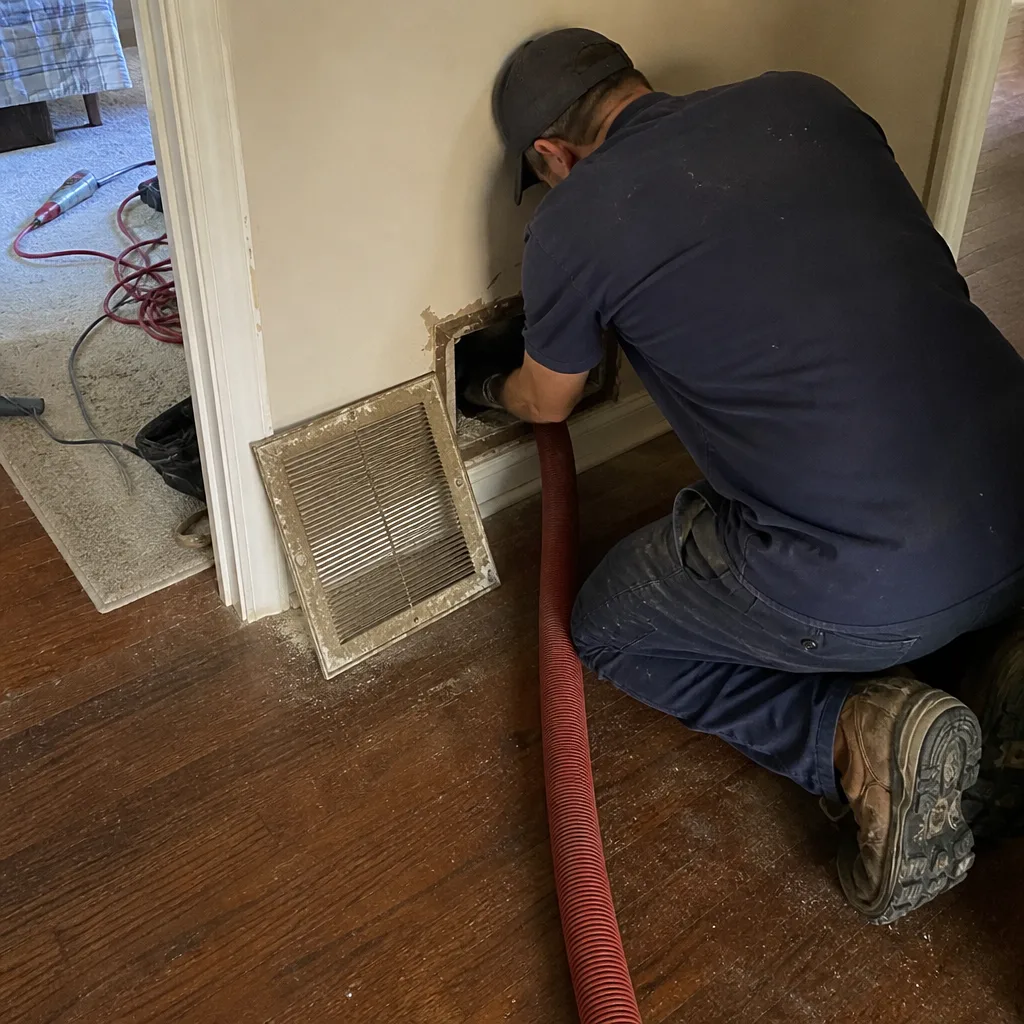 Before
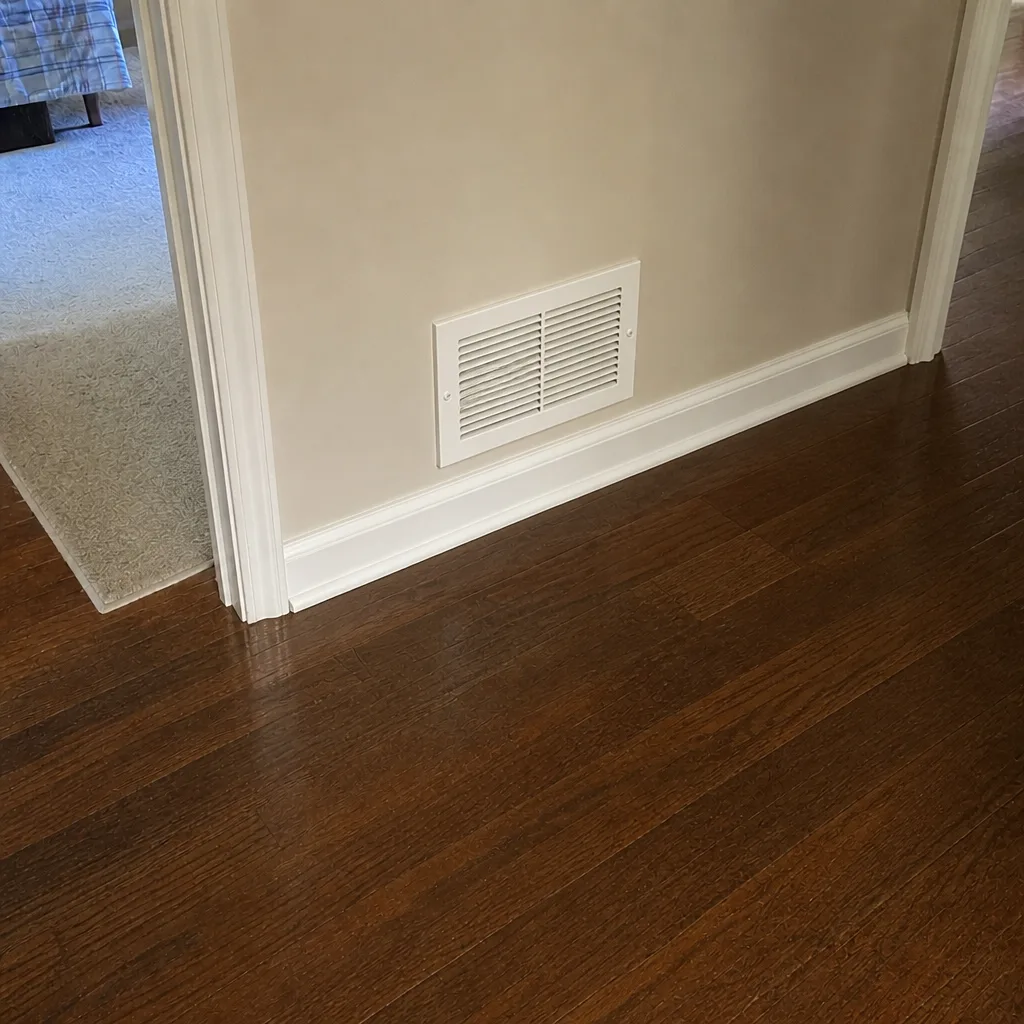 After
When to Call a Professional
Duct cleaning isn’t an annual obligation and it isn’t necessary for every home. The conditions that make it worth doing include a recent remodeling project in the house (construction dust migrates into ductwork), a new HVAC installation or major repair, visible mold or debris at a register, a home purchase where the duct history is unknown, or persistent allergy symptoms in the household that seem tied to the home’s air. If your dryer vent has never been cleaned and the home is more than a few years old, that’s a separate and more urgent call. In all of these cases, the right move is a professional inspection first, then a decision based on what’s actually in the system. Duct Cleaning Norfolk offers free estimates in Norfolk. Call (833) 519-7500 to set up an inspection. Our technicians have up to 14 years of experience and can tell you whether your ducts need cleaning, repair, or nothing at all.
Frequently Asked Questions
Ask three things: what specific vacuum and brush equipment they use (they should name brands and answer fluently), whether they carry general liability and pollution/contaminant insurance with verifiable certificates, and whether they perform a camera inspection before quoting. A legitimate contractor will give detailed, specific answers to all three. Vague answers on any one of them are a sign to move on.
No. Virginia doesn’t issue a duct-cleaning-specific license. Some contractors hold an HVAC contractor license through the state’s Department of Professional and Occupational Regulation, but that license covers the HVAC trade, not duct cleaning specifically. Because there’s no duct-cleaning license, your own verification of insurance, equipment, and inspection process is the real screening mechanism. Call (833) 519-7500 for a free estimate from our team; we’re happy to be screened against these same standards.
Pricing depends on system size, duct accessibility, and whether repair is needed alongside cleaning. The honest answer is that whole-system cleaning in this market falls in a range that reflects several hours of skilled labor and contractor-grade equipment, and any quote under $200 for a whole home should be treated as a teaser. We quote a flat price per system, in writing, before work starts. Call (833) 519-7500 for an exact figure based on your home.
Cheap quotes are usually one of three things: a teaser price that excludes most of the work, a per-vent model that balloons as the job proceeds, or a contractor without proper equipment cleaning only part of the system. The number you see in an ad often has no relationship to the final invoice. Ask every contractor what the quote covers and whether the price is final. Our written estimates set the final price, and that’s the standard to hold every contractor to.
Most homes don’t need duct cleaning on a schedule. The EPA and NADCA both take the position that cleaning should be done when conditions warrant it (visible debris, recent renovation, mold, pest activity, or a new HVAC install), not on a routine annual interval. A contractor who insists you need cleaning every year regardless of system condition is selling, not evaluating. A proper inspection tells you whether the work is needed at all. Call us for an inspection rather than a schedule.
Ask for before-and-after photos or video of your own ducts, taken with the contractor’s camera. Any serious duct cleaner will provide this as standard. Without visual evidence, you’re relying entirely on the contractor’s word, and that’s a thin layer of protection given how many under-equipped operators work in this trade. We document before-and-after condition as part of the job. If you’re confirming the standard, call (833) 519-7500 and ask what the documentation looks like.
The Bottom Line
Hiring a duct cleaning contractor in Norfolk is a screening problem, not a shopping problem. Virginia doesn’t license the trade, so your questions do the work the state doesn’t. The four questions that matter most: what vacuum and brush equipment they use (CFM rating and system type), whether they carry pollution/contaminant insurance alongside general liability, whether they inspect with a camera before quoting, and whether the price is whole-system and in writing. A contractor who answers all four confidently and specifically is a contractor worth hiring. One who can’t is one you’ve saved yourself the trouble of. If you want to start with an inspection and skip the guesswork, call Duct Cleaning Norfolk at (833) 519-7500. We answer 24/7. Fast dispatch from 7am to 7pm, Sunday through Friday. Estimates are free, and if your ducts don’t need cleaning, we’ll tell you that first.
Written by the team at Duct Cleaning Norfolk.