
Last updated November 15, 2026
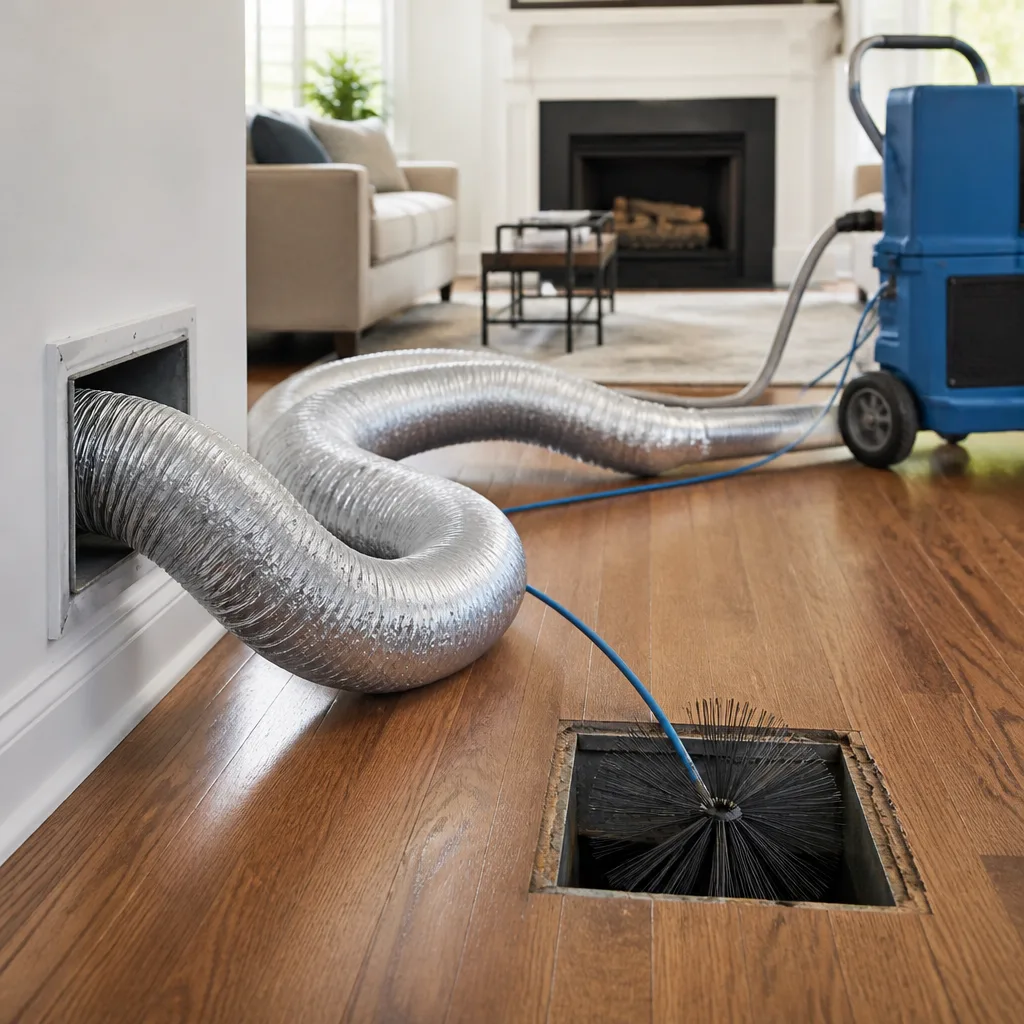 Whole-home duct cleaning
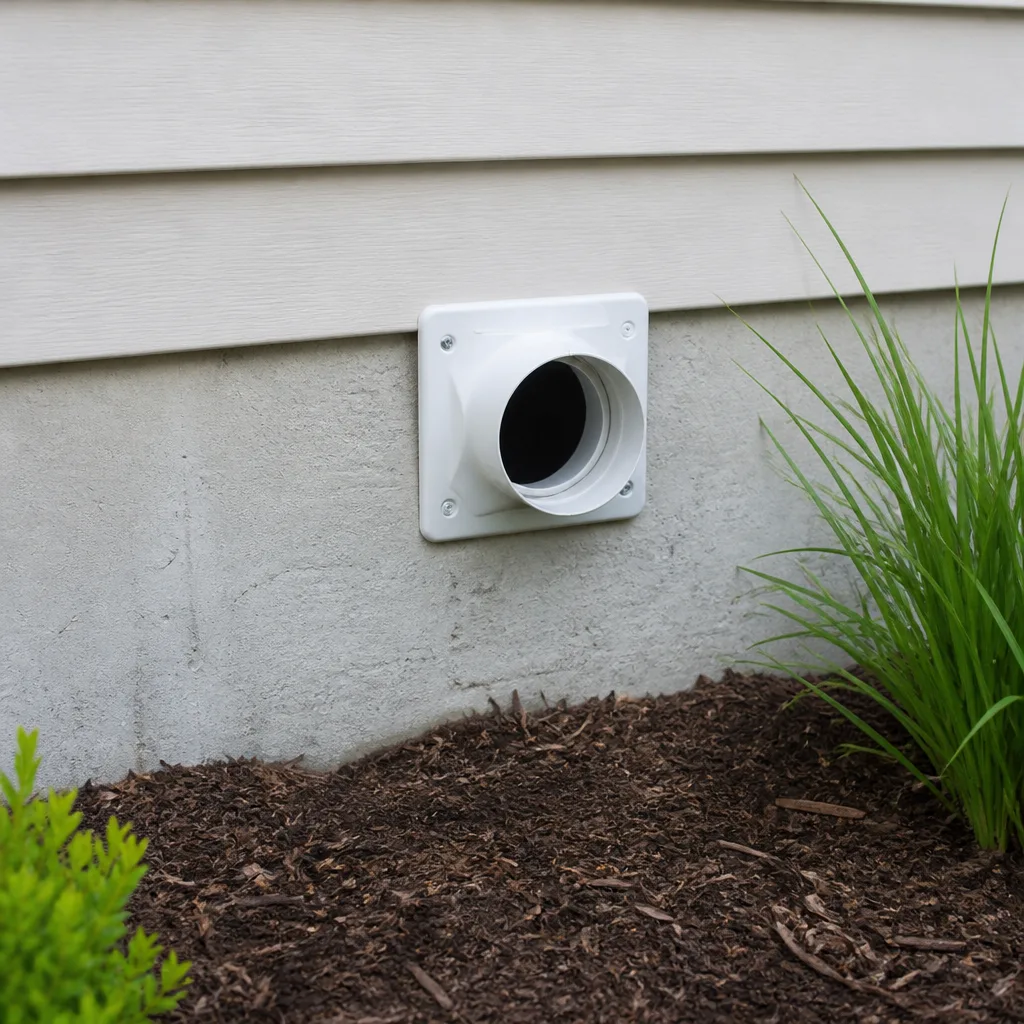 Dryer vent cleaning
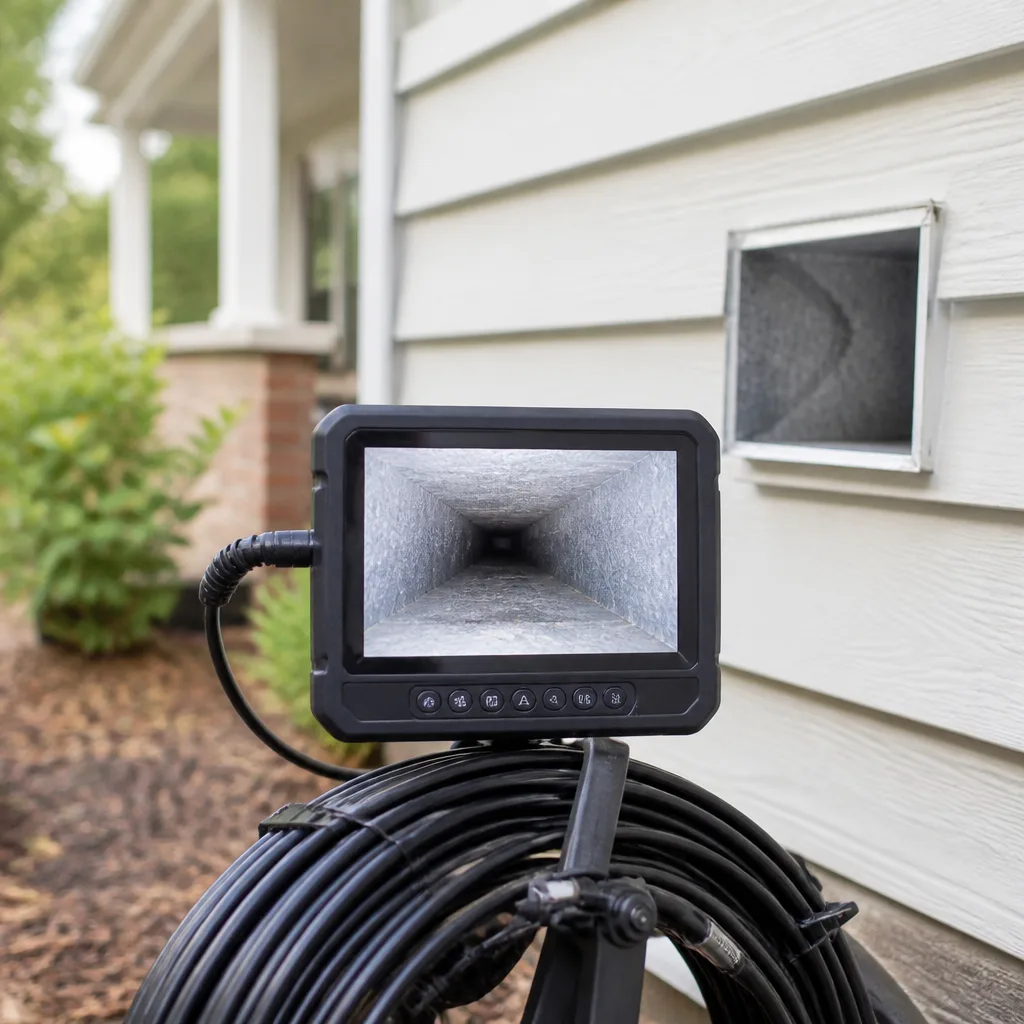 Camera inspection
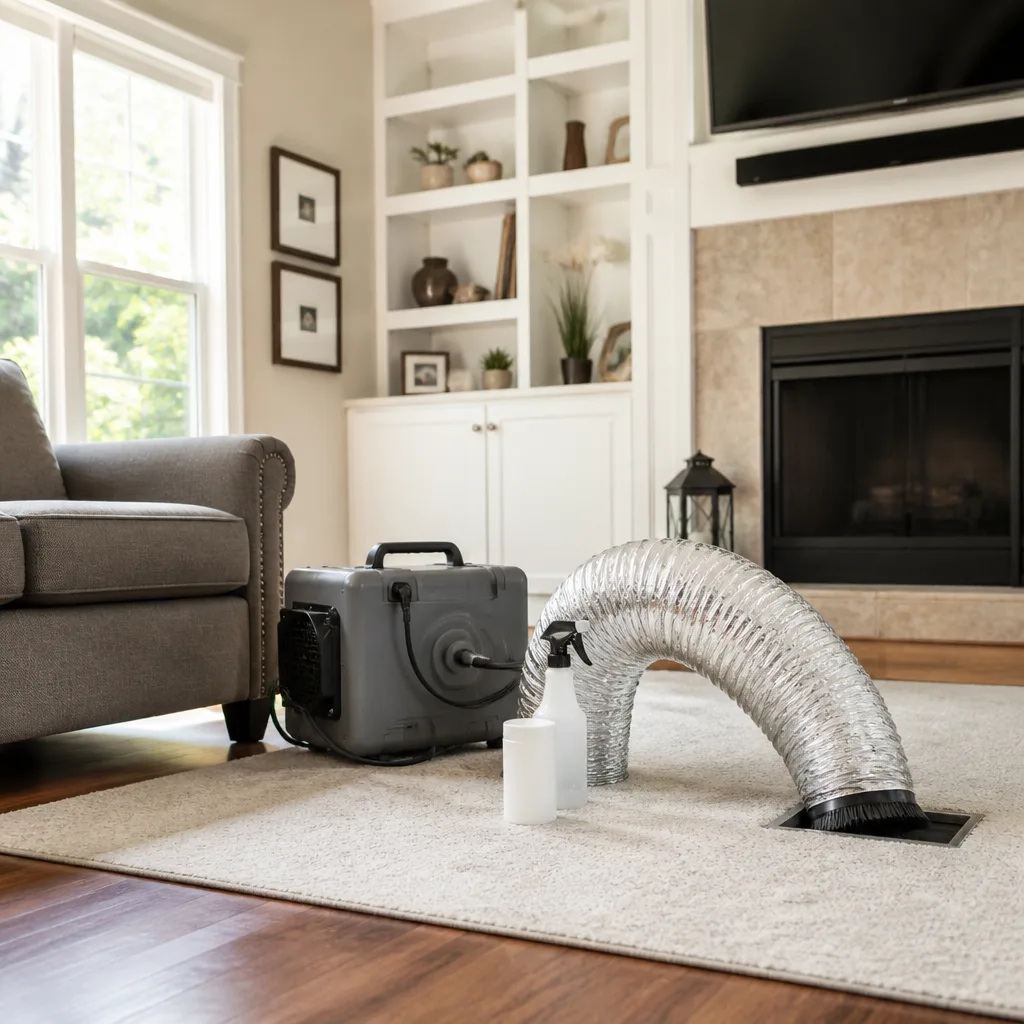 Sanitizing & deodorizing
Whole-system duct and dryer vent check with before-and-after photos - you see exactly what came out of your vents
That "$99 whole-house special" is a bait ad - the real number appears once they are in your hallway, or the "clean" is a shop-vac at the register. We photograph the inside of your ducts before and after instead.
Air Duct Cleaning Maintenance Schedule: What to Do and When
The most common piece of advice about duct maintenance is also the least useful: clean every three to five years. That figure gets repeated everywhere, and it falls apart the moment you apply it to a real house. A newer build with a well-sealed system and two occupants is not on the same schedule as a 1950s home with a dozen return grilles, two dogs, and an HVAC system that runs ten months out of the year. Norfolk sits in a humid climate where cooling season is long, and that changes the math again. This guide lays out a condition-based approach: what to measure, what to check, and when to actually schedule the work. By the end you’ll know how to read your own system instead of guessing at a calendar.
Quick Answer
There’s no single interval that fits every home. In Norfolk, most homes land somewhere between every two and every five years, and the deciding factors are house age, how hard the HVAC system works, how many people and pets live there, and how humid the ductwork stays. You should inspect registers and the air handler twice a year and let those observations, not a countdown, tell you when to book a professional cleaning.
Styles & brands we work with
- Whole-home duct cleaning
- Dryer vent cleaning
- Camera inspection
- Sanitizing & deodorizing
Table of Contents
- Why the Standard “Every 3 – 5 Years” Rule Falls Short
- The Condition-Based Decision Framework
- How Norfolk Humidity Changes the Timeline
- What to Do Between Professional Cleanings
- Scheduling Dryer Vent Cleaning on the Same Cycle
- Logging a Baseline After Each Cleaning
- How to Choose a Duct Cleaning Provider in Norfolk
- Repair vs. Cleaning: Knowing Which You Need
Why the Standard “Every 3 – 5 Years” Rule Falls Short
The three-to-five-year recommendation is a reasonable starting point, but it was written as a general guideline rather than a prescription for every home. It can’t account for how differently two houses on the same block in Norfolk can behave. One might have a tight, modern duct system with few seams; the next might have a decades-old layout with a long run through an unconditioned attic and returns that pull air from a hallway floor.
When we assess a home, we’re looking at four variables that drive contamination faster than simple elapsed time:
- HVAC run time. A system that runs most of the year moves far more air, and more airborne debris, through the ducts than one that runs a few months. In Norfolk, long cooling seasons push run time up.
- Occupant load. More people means more skin cells, hair, and fabric fibers cycling through the return air. Pets multiply that.
- House age and duct condition. Older ductwork often has more seams, joints, and gaps where dust settles and where unconditioned air leaks in. Leaky ducts also let humid air into the system, which we’ll get to.
- Local climate. A humid climate keeps duct surfaces damp longer after each cooling cycle, and dust that stays slightly damp clings rather than blowing through.
The practical result: a busy Norfolk household with pets and an older return-air layout can genuinely need attention on the shorter end of that range, while a lightly occupied newer home might comfortably stretch. Years elapsed is the weakest of the four signals. The condition of the system and what you can see at the registers should drive the decision.
The Condition-Based Decision Framework
Instead of watching the calendar, check three measurable conditions. None of them requires special tools, and all three are more reliable than guessing.
1. Visible debris at the registers
Pop off a supply register cover and look inside with a flashlight. A light, even film of dust is normal. What signals a problem is accumulation: matted dust along the edges, debris built up where the boot meets the duct, or anything you can see dropping when the system kicks on. Check a few registers, not just one, because the last register on a run tells a different story than the first.
2. Airflow difference between rooms
Hold your hand at each supply register while the system runs. If some rooms push strong air and others feel weak, you have an airflow imbalance. That can come from a partially closed damper or undersized duct, but it can also come from debris blocking a run, and it’s worth diagnosing. Note the rooms that feel weak; a technician can compare them after cleaning.
3. Filter loading rate
Write the date on the filter when you install it, and check it every month. A filter that loads up in four to six weeks instead of the usual two to three months is telling you the system is moving a lot of particulate. That loading rate is one of the best proxies you have for how fast the ductwork is collecting debris. If filters clog quickly and stay that way after a cleaning, the schedule needs to shorten.
When two or more of these conditions show up, or when filters load fast and stay fast, it’s time to schedule a professional assessment. A single weak register with a fast-loading filter in a pet household is a stronger signal than three years on a calendar. If you want the cleaning done right the first time, see air duct cleaning for what the process involves.
How Norfolk Humidity Changes the Timeline
Humidity is the factor most general schedules ignore, and in Norfolk it’s the one that most changes the answer. A long, humid cooling season means the inside surfaces of your ductwork spend more of the year at or near the dew point. When the system cycles off, moisture that condensed on cold interior surfaces doesn’t dry instantly. Dust and debris that settle on a slightly damp surface cling tighter than they would in a drier market, and duct liner, the fibrous insulation that lines many systems, absorbs and holds that moisture.
What does that do to the timeline? Duct liner that stays damp degrades faster, and once liner breaks down it sheds fibers into the airstream, which adds to the load the next cleaning has to remove. A drier inland market might let a homeowner stretch to five years; the same home’s ducts in Norfolk can accumulate surface contamination and liner wear sooner because the surface stays damp longer. That’s why we treat the coastal climate as a shortening factor, not a neutral one.
You can see one humidity signal yourself: condensation or water staining around registers and the air handler, or a musty smell when the fan starts. Either points to moisture the system isn’t managing. Reducing indoor humidity with proper ventilation and a well-matched filter helps, and it’s a real reason to look at filtration rather than just cleaning. If your humidistat or air handler setup suggests the system needs help, brands like Aprilaire and Honeywell make filtration and humidity products worth discussing with a technician. For homes throughout Norfolk, humidity isn’t an occasional issue; it’s the backdrop for every maintenance decision.
What to Do Between Professional Cleanings
A lot of what keeps ducts in good shape happens in the months between visits. These tasks are low-effort and give you the data you need to know when to book the next cleaning.
- Clean register covers and grilles. Dust that settles on the grille gets pulled back into the system. Wipe supply and return covers every few weeks, and remove and rinse them a few times a year. It takes minutes and reduces what lands inside.
- Match the filter to the system, not the store shelf. Filter spec matters more than most people realize. A filter rated higher than your system can handle restricts airflow and puts strain on the blower; too low a spec lets fine particulate through. Check the filter size on the air handler label and choose a spec that matches the system’s needs. If you’re unsure, that’s a question worth asking during a service visit.
- Do a visual inspection protocol every month. Walk the house with a flashlight. Check two or three supply registers, the return grille, and the air handler cabinet. Look for dust accumulation, moisture, or debris. Note anything unusual. This monthly look becomes the record you bring to your next appointment.
- Keep the return path clear. Make sure furniture, rugs, or boxes aren’t blocking return grilles. A blocked return changes the pressure balance and pushes dust into every seam and joint.
These steps won’t replace a professional cleaning, but they slow accumulation and, just as important, they teach you your system’s behavior. A homeowner who checks registers monthly knows when something shifts. That’s the whole point of a condition-based approach: you’re collecting small signals so the big decision stops being a guess.
Scheduling Dryer Vent Cleaning on the Same Cycle
Dryer vent cleaning belongs on the same maintenance rhythm as duct cleaning, and there’s mechanical logic behind bundling them. Both jobs involve moving air through a duct run, both are served by the same contractor-grade equipment, and both benefit from being handled by someone who can inspect the full path while the tools are already out.
More importantly, a clogged dryer vent is a documented fire risk. Lint builds up in the vent and the rear of the dryer, restricting airflow and raising the dryer’s operating temperature. That’s not a fear tactic; it’s the reason dryer vent cleaning is offered as a dedicated service rather than a cheap add-on. When we handle dryer vent cleaning, we inspect the run and clear the lint, and we treat it as fire-risk mitigation, not a detail.
How to time it: put dryer vent cleaning on the same cycle as your duct cleaning, and check your dryer’s exhaust at least twice a year. If laundry takes longer to dry, the dryer feels hot to the touch, or you see lint around the rear vent, that’s an immediate signal, not a wait-for-next-time signal. Homes with heavy laundry loads should shorten the interval. Since the technician is already bringing the containment and vacuum equipment for the ducts, scheduling both together keeps the work efficient and gives you one assessment of both air paths.
Logging a Baseline After Each Cleaning
Here’s where most maintenance breaks down: after a cleaning, nobody records what the system looked like. The next technician starts from blank. You can fix that by keeping a simple maintenance log, and it becomes the most valuable document you own when it comes to your ducts.
After every professional cleaning, record four things:
- The date and the scope of work. What was cleaned, and how far into the system.
- Register airflow notes. Which rooms felt strong and which felt weak, taken right after the work.
- Filter spec and replacement date. Note the actual filter rating and size installed.
- Before-and-after conditions. Any observations from the technician, and photos of the duct interior if the provider supplies them. Before-and-after photos of your own ducts are exactly the record you want.
With that log, your next assessment is comparative. You’re not asking “does this look dirty?” You’re asking “is this dirtier than it was two years ago, and is this filter loading faster than it used to?” That question has an answer. A technician can look at the log, see the filter loading rate climbing, and tell you the interval needs to shorten. The log turns a judgment call into a measurement, and it’s the single best habit a Norfolk homeowner can build.
How to Choose a Duct Cleaning Provider in Norfolk
The duct cleaning industry has a reputation problem, and it’s earned by operators who advertise a teaser price and then find a list of “problems” once the truck is parked. You avoid that by knowing what to look for before you book, and by understanding what separates real equipment from a shop-vac setup.
Here’s what to check:
- Purpose-built equipment. Professional duct cleaning uses a rotary brush system for mechanical agitation and a high-powered HEPA-filtered vacuum to capture what the brush dislodges. Rotobrush is a common industry standard for the brush-and-extract work, and Nikro builds HEPA-filtered vacuums that keep debris contained. A generalist with a shop vacuum can’t do what these tools do inside a duct run.
- Containment and negative air. The equipment should capture debris, not spread it into your living space. Abatement Technologies makes containment and negative-air gear in the same class used for remediation work, and a provider who runs it is treating your home as a controlled work area.
- A price agreed before work starts. Ask what “cleaned” actually means: which runs, how far, and what’s included. Avoid per-vent pricing, which invites price creep. A flat, whole-system price agreed up front is the cleanest arrangement, and a written estimate should be standard.
- Dryer vent capability. Ask if dryer vent cleaning is part of the service and whether the technician inspects the full run. A provider who skips it is leaving a fire risk untouched.
- Repair capability. Ask if they address damaged or leaky ducts, not just clean them. Cleaning a leaking system without fixing the leaks means the debris comes back faster.
We built Duct Cleaning Norfolk around these three services: cleaning, repair, and dryer vent safety, handled by one team with the right equipment. Our technicians have up to 14 years of experience, and the estimate is free. If a provider can’t answer these questions clearly, that’s your answer.
Repair vs. Cleaning: Knowing Which You Need
Sometimes the ducts don’t need cleaning; they need fixing. The two overlap, but they’re different jobs, and knowing the difference keeps you from paying for the wrong one or hiring twice.
Cleaning removes accumulated debris from the interior of the ductwork. Repair addresses physical damage to the ducts themselves: disconnected joints, crushed or collapsed sections, gaps at seams, torn duct liner, and leaks where the system pulls unconditioned air in. You can spot the likely repair cases yourself:
- Airflow that’s weak in a room even after a cleaning.
- Visible gaps, tears, or separation at joints you can reach.
- Whistling or rattling at seams when the system runs.
- Dust returning quickly after a cleaning.
- Condensation or moisture appearing where ducts run through unconditioned space.
Leaky ducts in a humid Norfolk climate are a double problem: they let dust in and let humid air into the system, which feeds the liner problems we covered earlier. Cleaning alone doesn’t close that gap. We carry repair as a standalone service precisely because cleaning a system with broken ducts just means cleaning it again sooner. Our approach is to clean what’s there and fix what’s broken, so you don’t need a second contractor. When a cleaning assessment turns up damaged ductwork, we can go straight to repair rather than sending you elsewhere. That’s part of why the three services sit together in one place.
Common Mistakes to Avoid
- Treating the calendar as the only signal. Booking a cleaning strictly because three years passed, while ignoring fast-loading filters and weak registers, means you might clean too early or too late. Read the conditions first.
- Choosing on price alone. A teaser price usually grows once a technician is on site. In a market full of bait-and-switch offers, a flat, whole-system estimate agreed before work starts is the protection you want.
- Skipping the dryer vent. Many providers treat it as an afterthought, but lint buildup is a real fire risk. Put it on the same cycle as duct cleaning.
- Ignoring humidity signals. In Norfolk’s climate, dampness around registers and a musty smell on startup are clues the system has a moisture problem, not just a dirt problem. Cleaning without addressing moisture leaves the cause.
- Using the wrong filter spec. A filter too restrictive or too porous disrupts the system’s balance and shortens intervals. Match the spec to the air handler.
- Cleaning without checking for damage. If ducts are leaking at joints or seams, a cleaning alone won’t hold. Ask about repair during the same visit.
- Not keeping records. Without a log, every visit starts from zero. Ten minutes of note-taking makes the next assessment objective.
See the difference
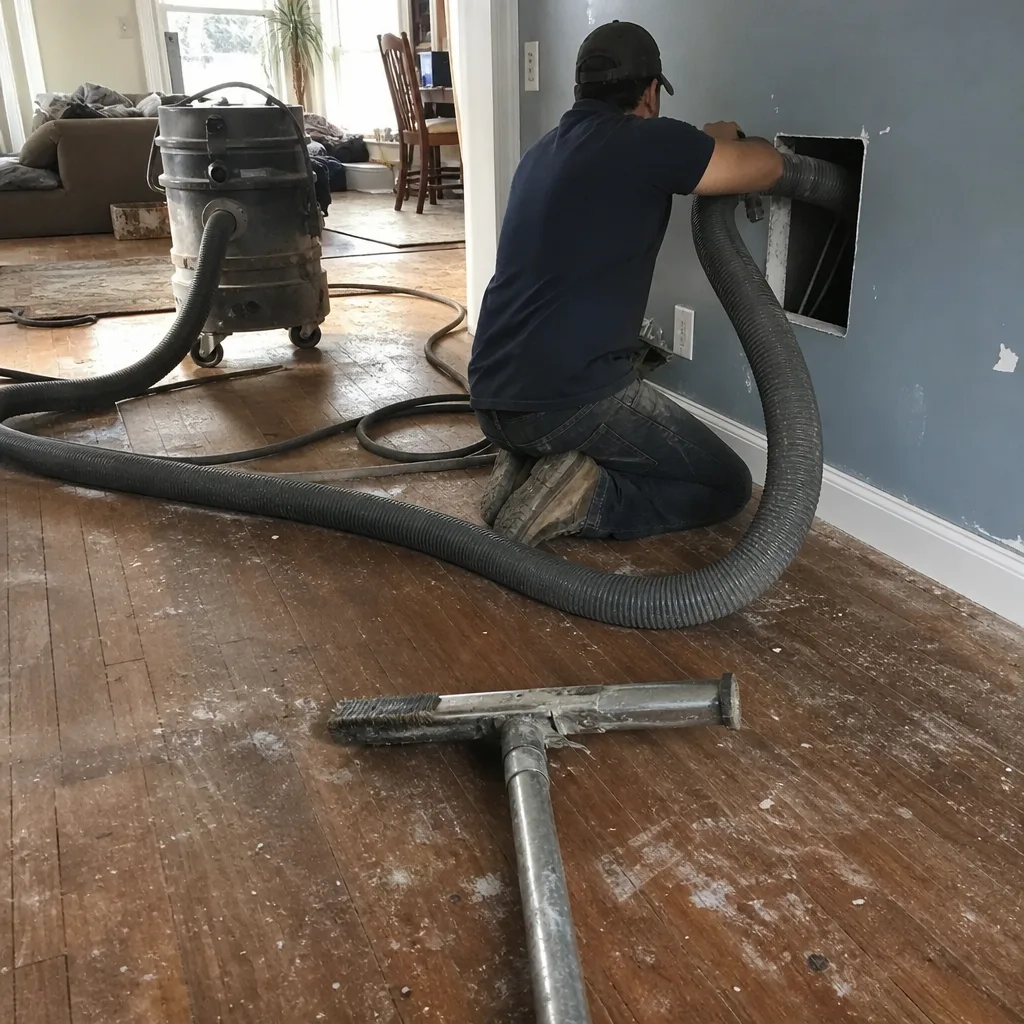 Before
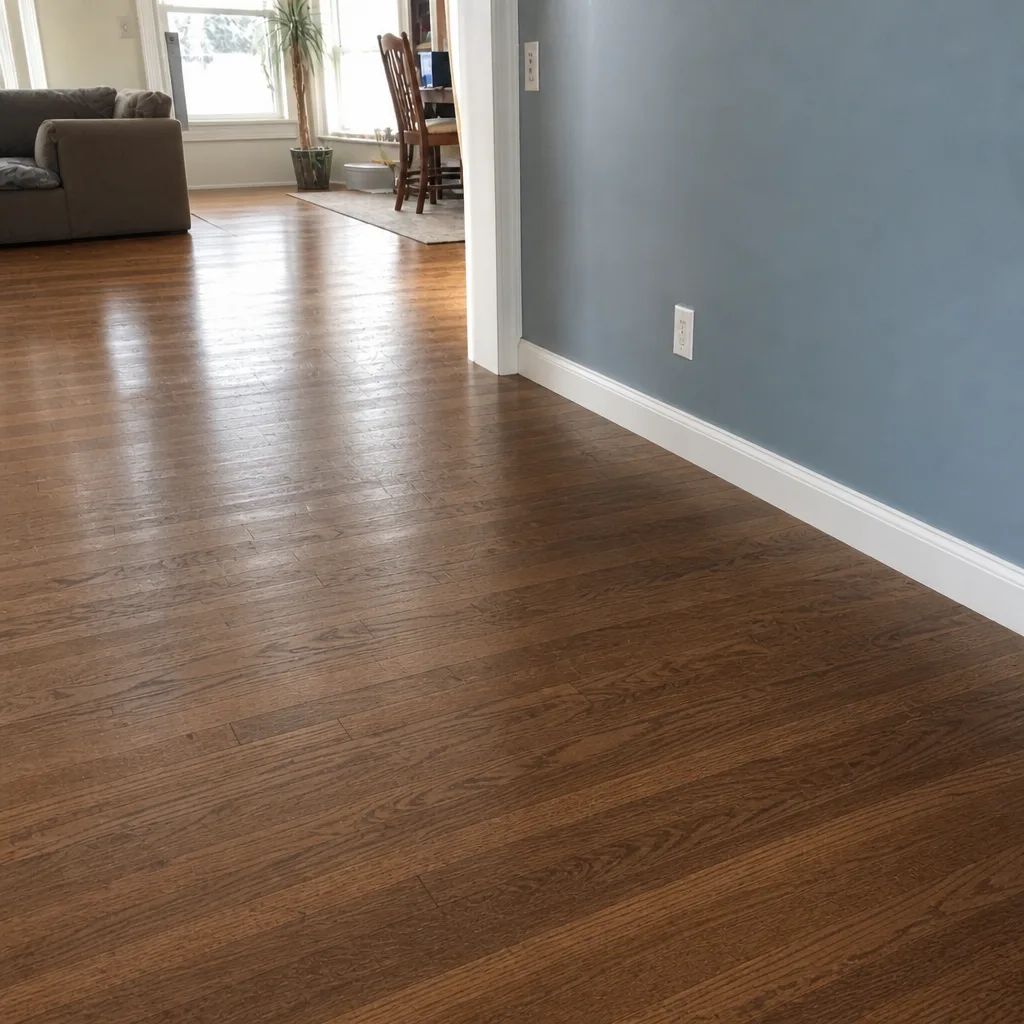 After
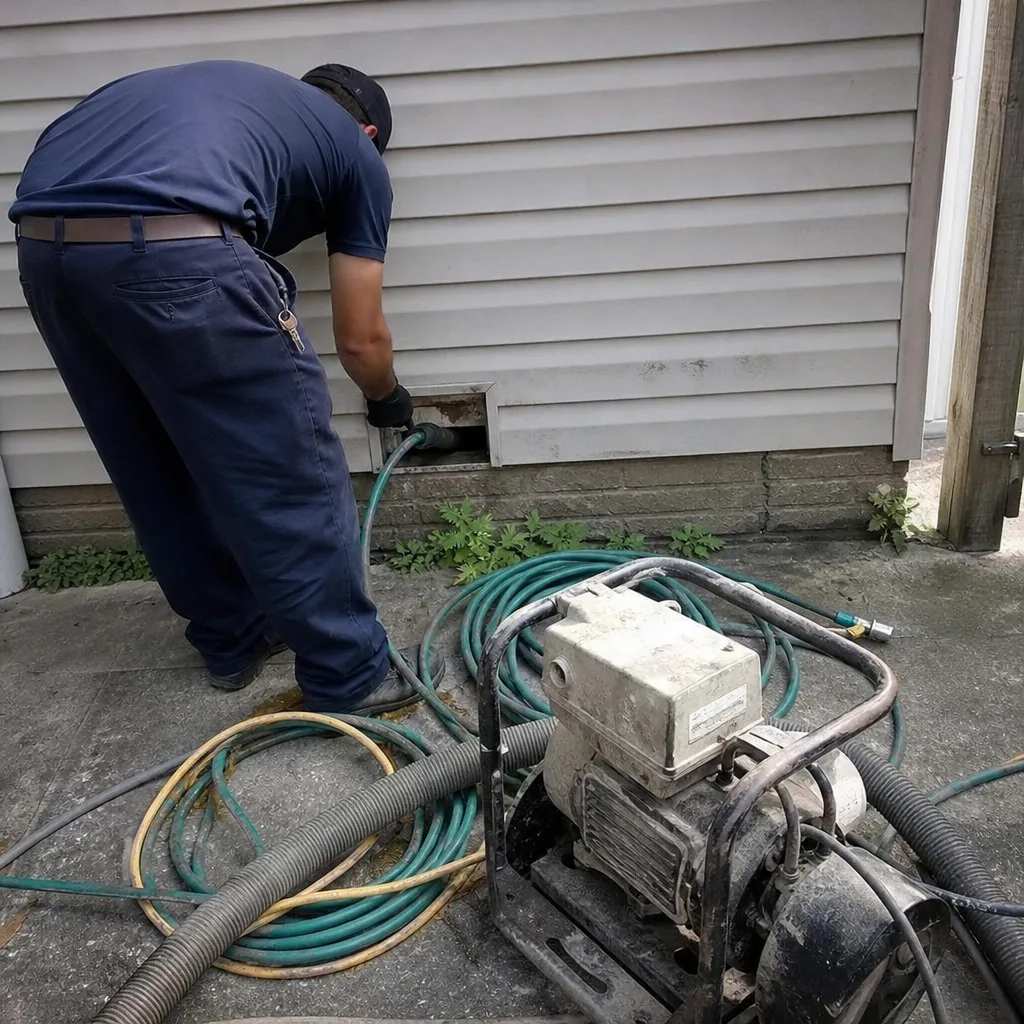 Before
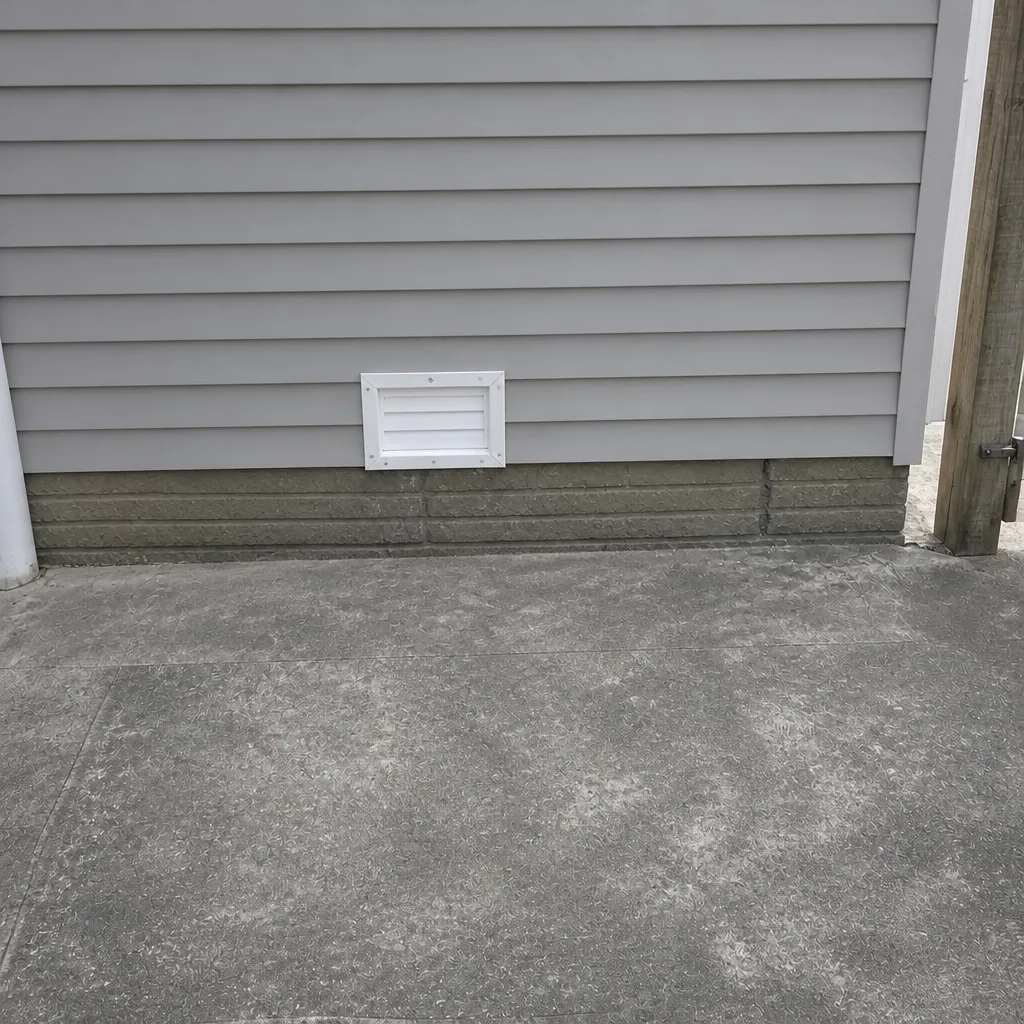 After
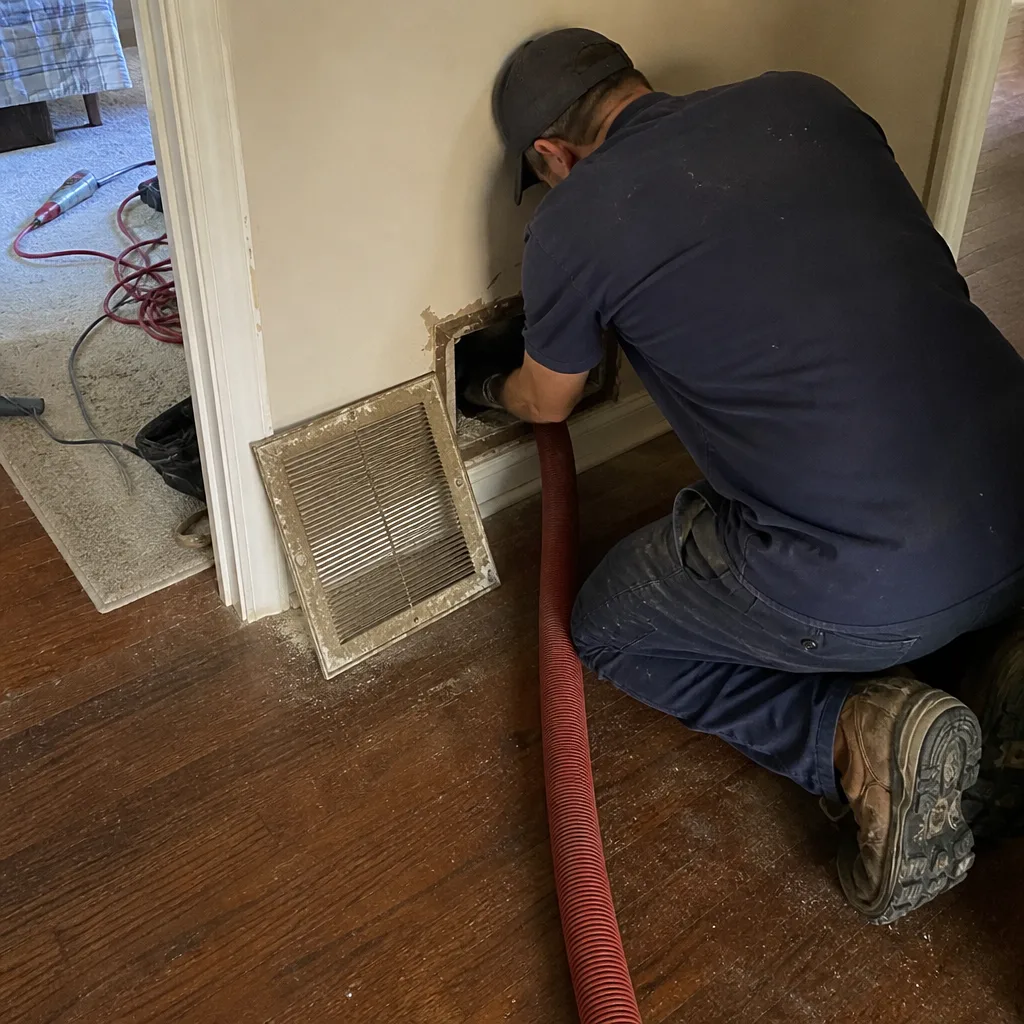 Before
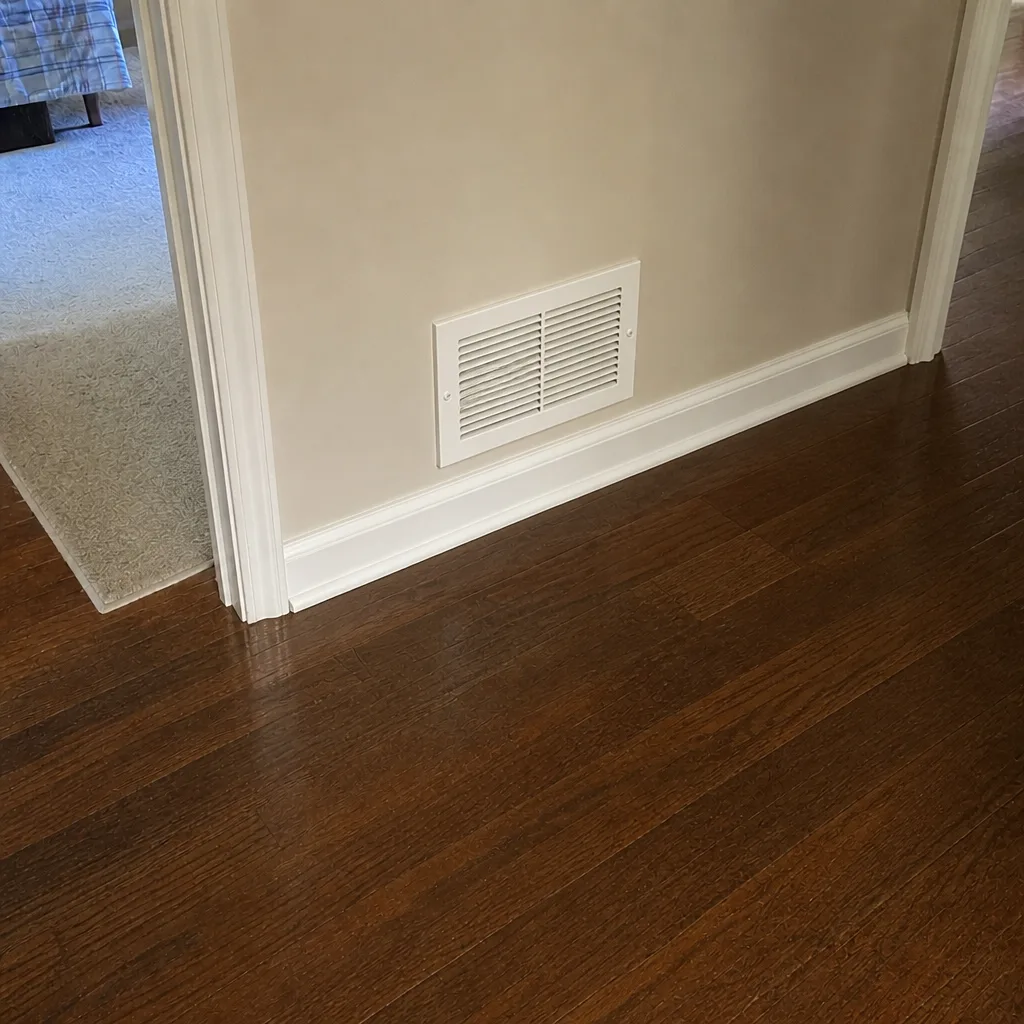 After
When to Call a Professional
Call a professional when you see two or more condition signals together, or any one of the clear red flags. That means fast-loading filters that stay fast, visible debris at several registers, weak airflow in specific rooms, dampness or a musty smell when the fan starts, visible gaps or tears at joints, or a dryer that takes noticeably longer to dry. It also means any recent renovation or home purchase, when hidden debris and unknown duct condition justify an assessment. Duct Cleaning Norfolk offers free estimates in Norfolk. Call (833) 519-7500 to schedule. We answer 24/7, and fast dispatch runs 7am to 7pm, Sunday through Friday. Our technicians have up to 14 years of experience and use contractor-grade Rotobrush, Nikro, and Abatement Technologies equipment, so the work is done with containment and proper extraction.
Frequently Asked Questions
Most Norfolk homes fall between every two and five years, and the deciding factors are house age, HVAC run time, occupant load, and humidity exposure rather than the calendar alone. Check registers, airflow, and filter loading rate to judge your own interval. Call (833) 519-7500 for an exact quote; estimates are free.
Because that guidance was written as a general reference and can’t account for the variables that drive contamination, which is why busy pet households with long cooling seasons can need attention sooner. Years elapsed is the weakest signal; condition is stronger. If your filters load fast, call (833) 519-7500 for an assessment.
Yes. Norfolk’s long humid cooling season keeps duct surfaces damp longer, and damp surfaces hold dust and degrade duct liner sooner than in drier inland markets. Watch for condensation at registers and musty smells on startup. Call (833) 519-7500 for an exact quote; estimates are free.
Yes. Bundling them makes sense because both involve duct runs and the same equipment, and dryer lint buildup is a documented fire risk. Schedule dryer vent cleaning with your duct cleaning and check the exhaust twice a year. Call (833) 519-7500 to book both.
Ask for before-and-after photos of your own ducts and keep them with your maintenance log, so the next technician has a baseline to compare against. A provider who uses proper containment and extraction equipment can document the work. Call (833) 519-7500 for a free estimate.
Low teaser prices often grow once a technician is on site, because per-vent pricing and upselling replace a clear scope. Ask what “cleaned” covers and insist on a flat, whole-system price in writing before work starts. Call (833) 519-7500 for a straight estimate.
The Bottom Line
The right duct maintenance schedule is the one your system tells you it needs. For Norfolk homeowners, that means watching registers, airflow, and filter loading rate; treating the humid climate as a shortening factor; keeping a log after each cleaning so the next visit has something to compare against; and putting dryer vent cleaning on the same cycle. Inspect monthly, schedule professional cleaning when the conditions point to it, and address damaged ducts rather than cleaning around them. Cleaning, repair, and dryer vent safety are one call when you work with a team that carries the equipment to do all three. Call (833) 519-7500. We answer 24/7. Fast dispatch from 7am to 7pm, Sunday through Friday. Estimates are free.
Written by the team at Duct Cleaning Norfolk.