
Last updated November 15, 2026
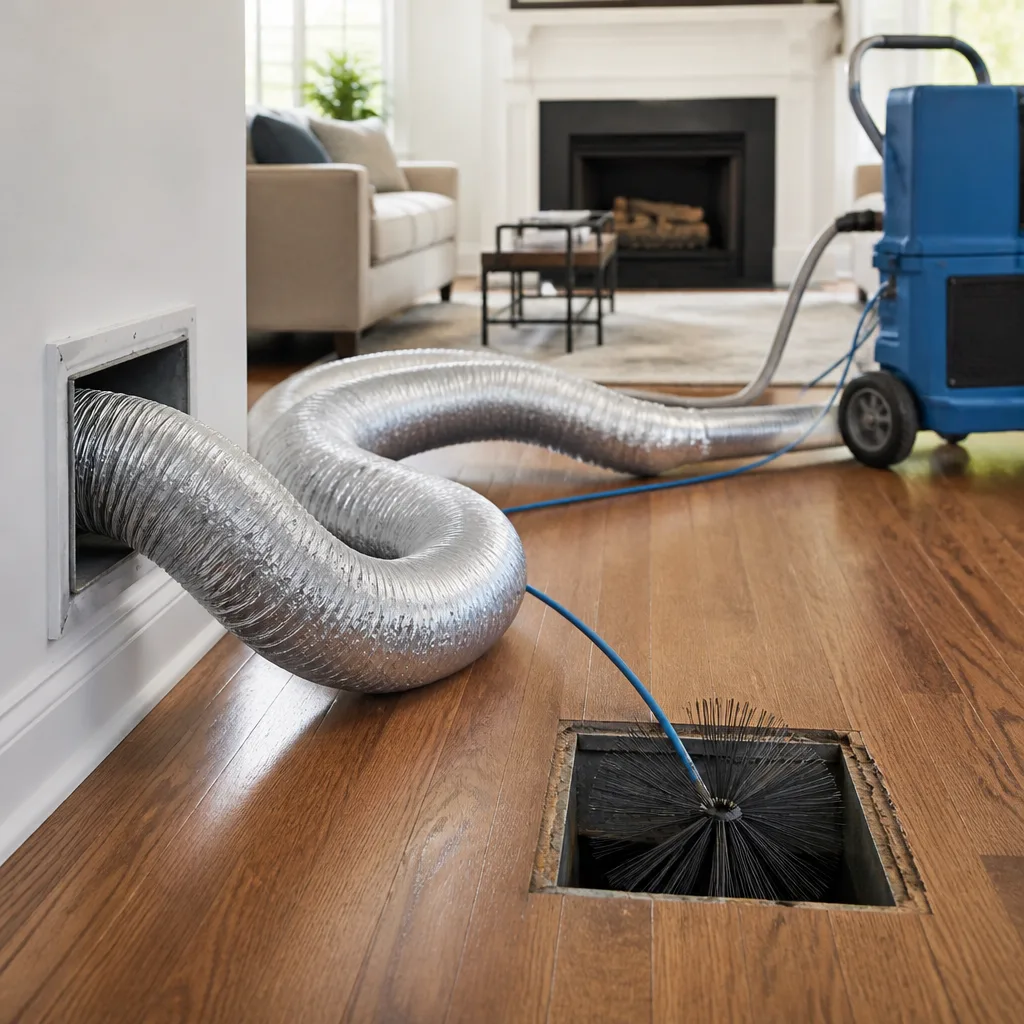 Whole-home duct cleaning
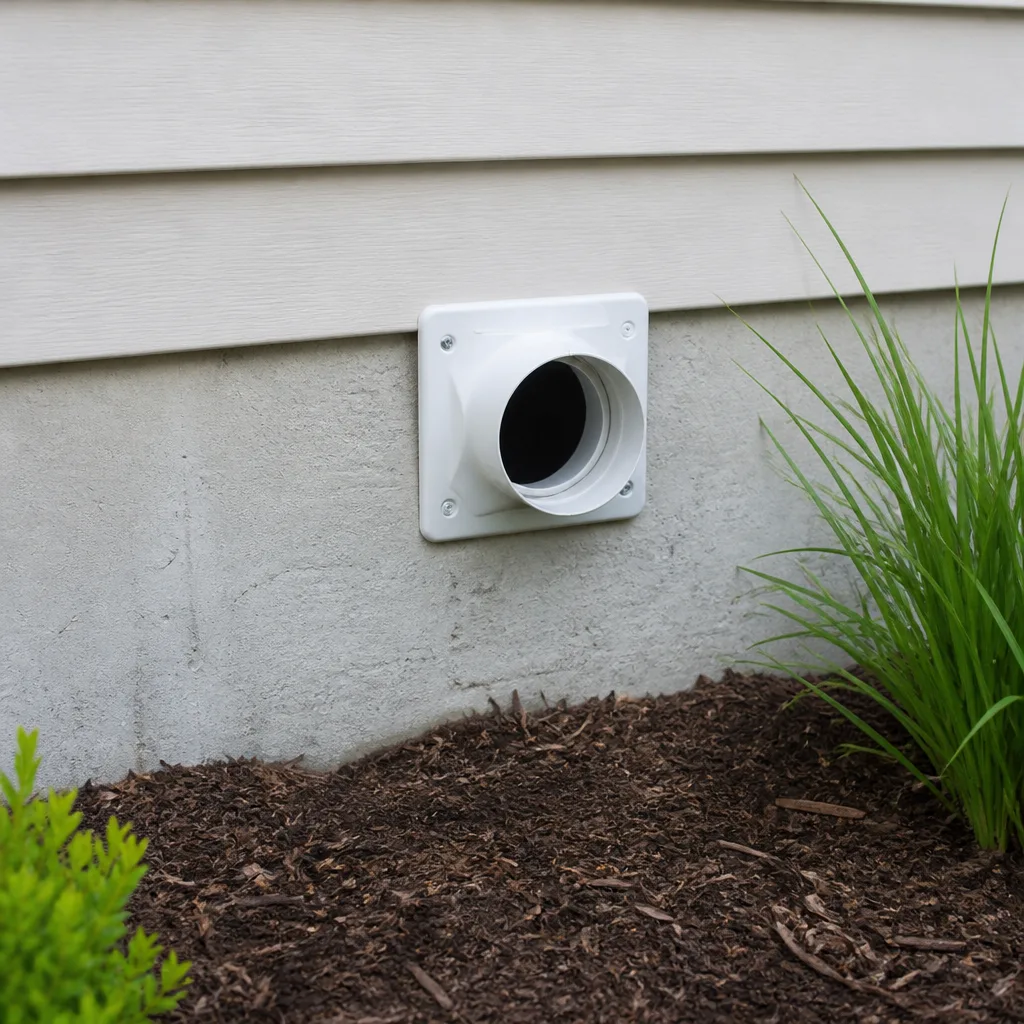 Dryer vent cleaning
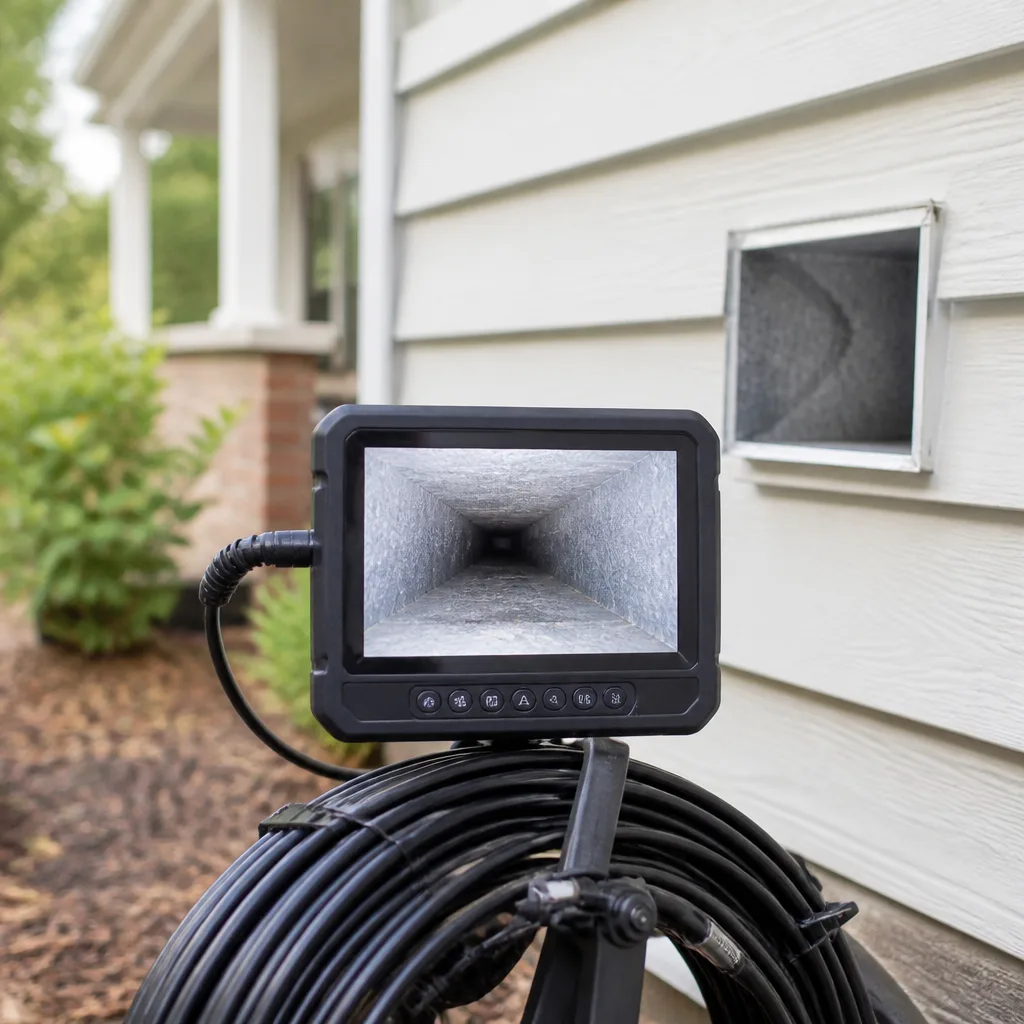 Camera inspection
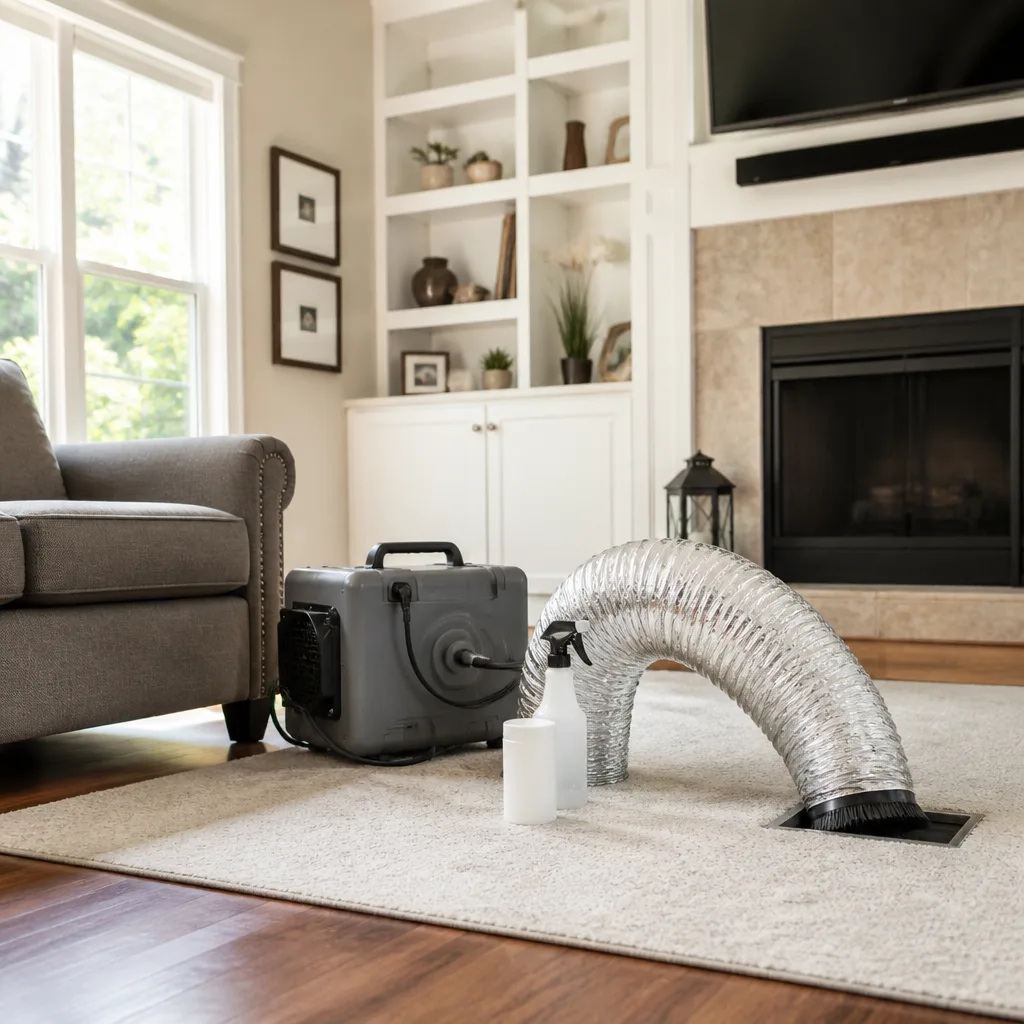 Sanitizing & deodorizing
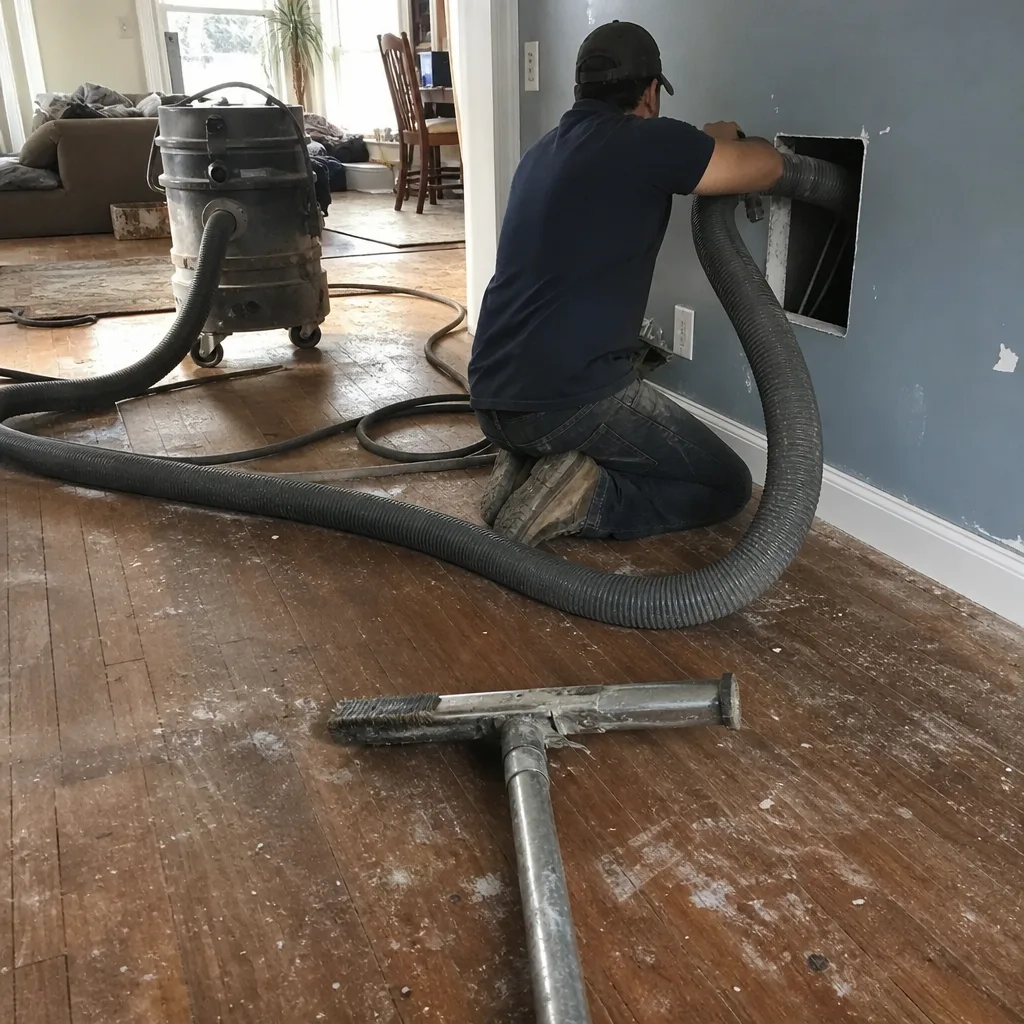
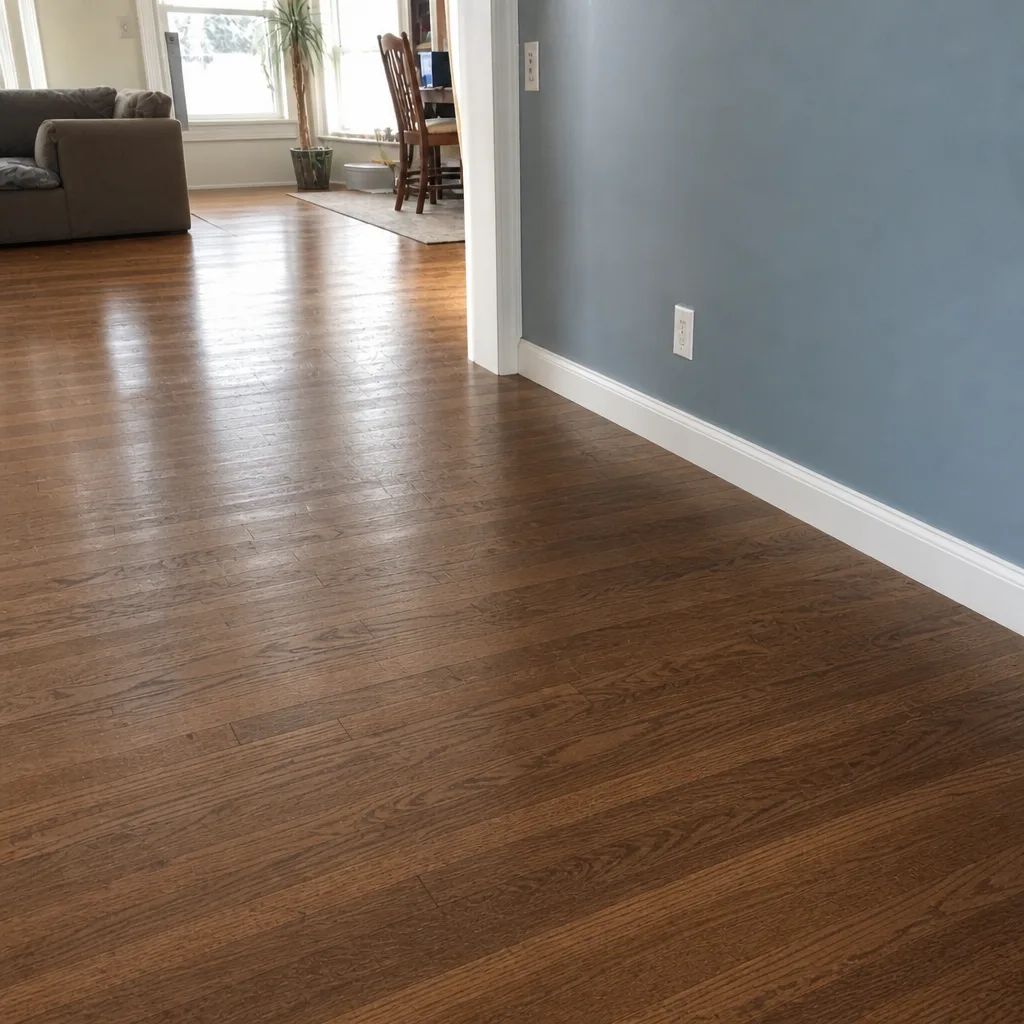
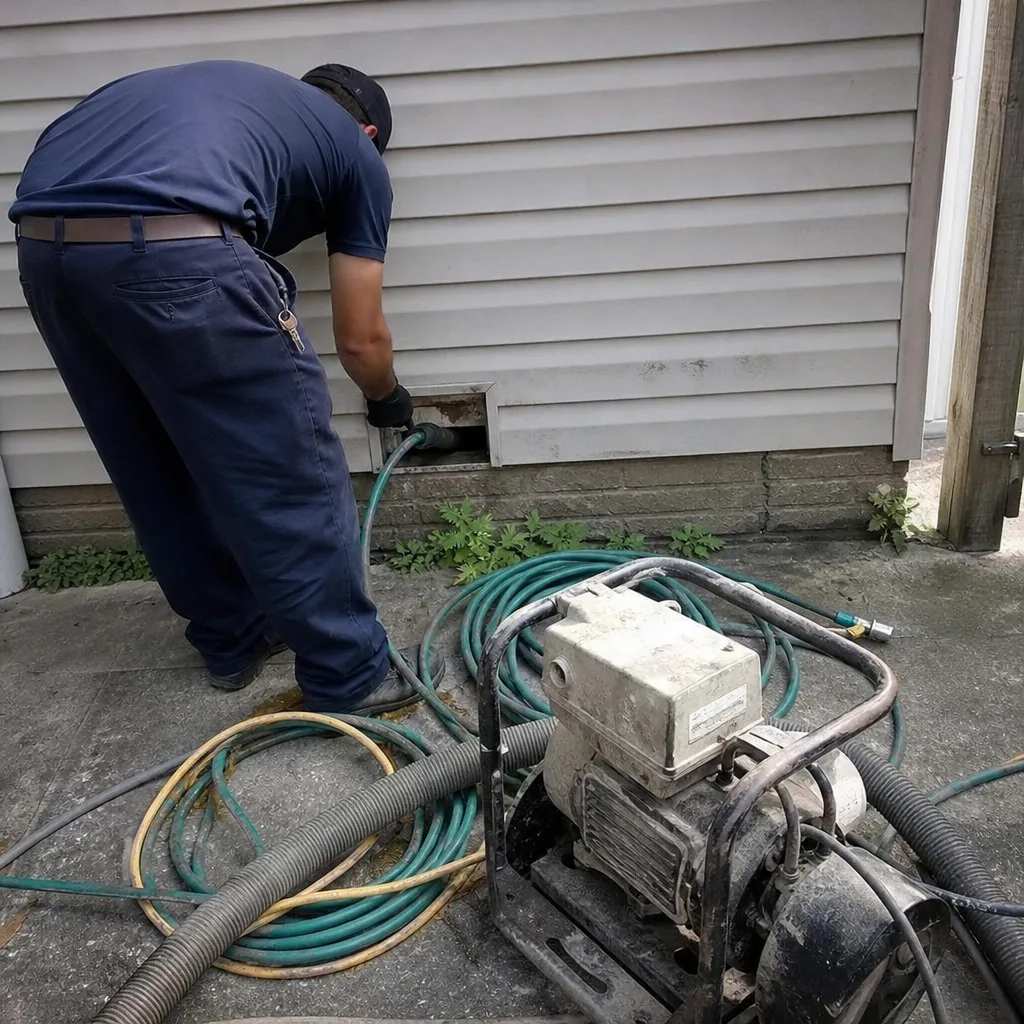
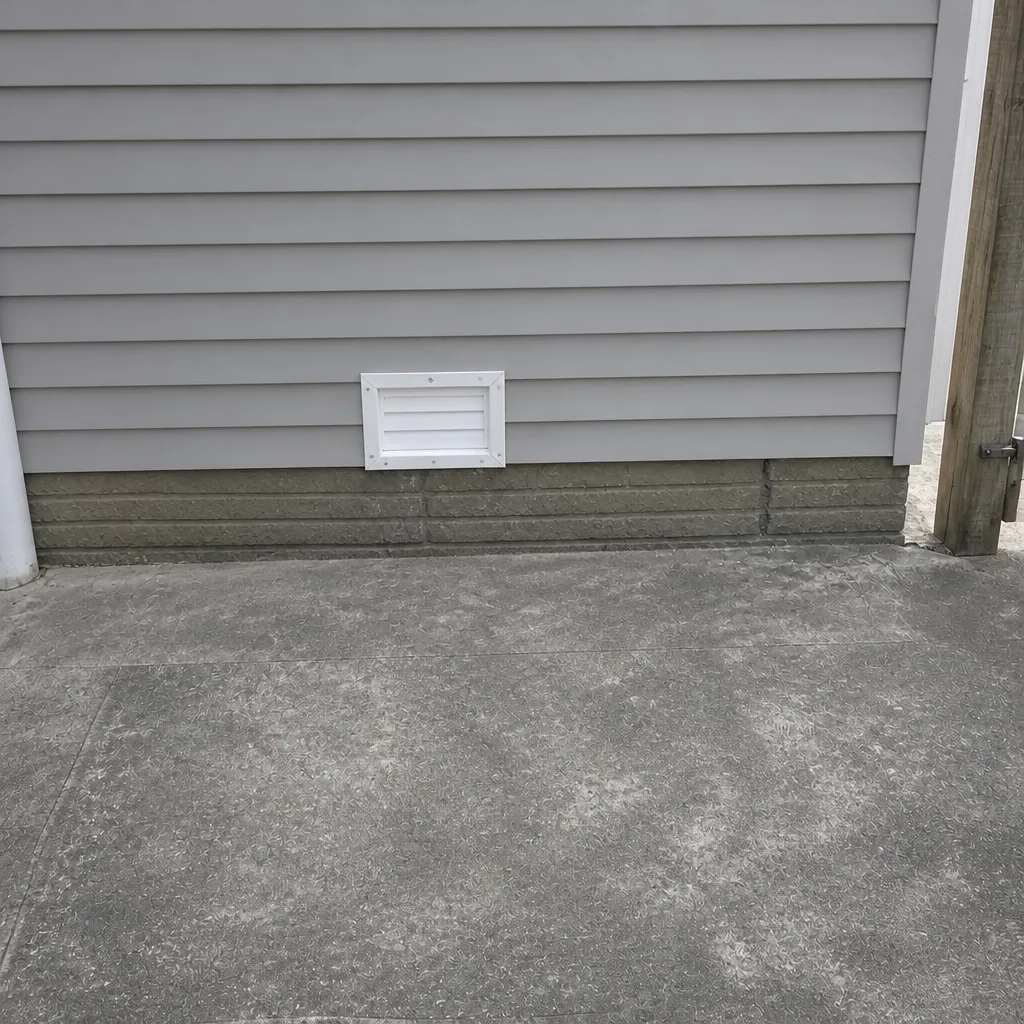
Whole-system duct and dryer vent check with before-and-after photos - you see exactly what came out of your vents
That "$99 whole-house special" is a bait ad - the real number appears once they are in your hallway, or the "clean" is a shop-vac at the register. We photograph the inside of your ducts before and after instead.
Air Duct Cleaning Permits, Codes & Inspections in Norfolk, VA: What You Need to Know
Cleaning a duct system is maintenance. Cutting one open, replacing a section, or sealing a joint is construction. That line matters more than most homeowners realize, because the first activity needs no permit in Norfolk while the second can trigger requirements under the Virginia Uniform Statewide Building Code. A cleaning job that uncovers a crushed trunk line or a disintegrated section of flex duct has just crossed from maintenance into mechanical work, and the contractor standing in your hallway may not volunteer that the scope changed. This guide explains where that line actually sits, how Norfolk’s permit process works for HVAC-adjacent repair, what Virginia’s Indoor Clean Air Act does and doesn’t cover, and how to confirm that finished duct repair was inspected properly, which becomes a documentation question when you sell the house.
Quick Answer
Routine air duct cleaning in Norfolk does not require a building permit. Duct repair that involves replacing duct sections, cutting into or extending the duct system, or altering the mechanical system does fall under the Virginia Uniform Statewide Building Code, and that work typically requires a permit and an inspection through the City of Norfolk. The permit belongs to the contractor performing the mechanical work, not to the cleaning crew, and you should ask for it in writing before the first cut is made.
Styles & brands we work with
- Whole-home duct cleaning
- Dryer vent cleaning
- Camera inspection
- Sanitizing & deodorizing
Table of Contents
- Where Cleaning Ends and Mechanical Work Begins
- What the Virginia Mechanical Code Actually Governs
- How the Norfolk Permit Process Works for Duct Repair
- What the Virginia Indoor Clean Air Act Covers
- When Mold Inside Ducts Needs a Separate Licensed Contractor
- How to Verify the Work Was Inspected
- Why the Paperwork Matters at Resale
- Commercial and Rental Properties: Higher Stakes
Where Cleaning Ends and Mechanical Work Begins
The clearest way to think about it: if the duct system stays exactly as it was and only gets cleaned on the inside, you’re in maintenance territory. If anything about the system’s physical configuration changes, you’ve moved into mechanical work. That distinction is the whole ballgame when it comes to permits.
Here’s how the work generally splits.
Cleaning: no permit
- Running a rotary brush and negative-air vacuum through existing duct runs
- Removing debris, dust, and loose buildup from duct interiors, registers, and plenums
- Cleaning the supply and return sides of the system
- Cleaning the blower compartment and accessible components without altering them
- Cleaning the dryer vent run
Repair: often permit territory
- Replacing a collapsed, crushed, or torn section of duct
- Cutting in new supply or return branches
- Sealing duct joints with mastic or approved tape where the system is being modified
- Reconnecting a disconnected duct run
- Changing the size, routing, or configuration of ductwork
- Any work that changes how the mechanical system moves air
The complication is that cleaning and repair often happen on the same visit. A technician cleaning a run in a 1950s home near Wards Corner may find that the duct has separated at a joint, and the cleaning can’t be completed without reconnecting it. That’s a legitimate discovery, not an upsell, but it does change the scope of the job. The question you need answered before anything is touched is whether that reconnection requires a permit. Sometimes it does. Sometimes a simple reconnect of an existing joint is treated as routine maintenance. The honest answer is that it depends on your locality’s interpretation and on how much of the system is being altered, which is exactly why you want the contractor to spell it out in writing. We don’t just clean what’s there, we fix what’s broken, and that means we have this conversation with customers on a regular basis. For a sense of how those two services differ in practice, our air duct cleaning page covers the cleaning side in detail.
What the Virginia Mechanical Code Actually Governs
The Virginia Uniform Statewide Building Code adopts the International Mechanical Code as its technical basis, with Virginia amendments layered on top. That code governs the installation, alteration, repair, and maintenance of mechanical systems, and ductwork is squarely part of the mechanical system. The word that matters most for homeowners is alteration.
Maintenance is exempt from permitting in most cases. Alteration is not. The code language is written to cover anything that changes the design, function, or routing of the system, and that’s the hinge on which your permit question swings.
What the code cares about, in practical terms:
- Duct sizing and airflow. A repair that changes duct dimensions or adds branches affects the system’s ability to deliver the right CFM to each room. The code has provisions for this, and an inspector will check it.
- Sealing. Duct joints and seams in conditioned spaces have sealing requirements. Where ducts pass through unconditioned space, the requirements get tighter.
- Materials. Duct materials and sealants have to be rated for the application. That includes approved tapes and mastics, not whatever was in the truck.
- Support and clearance. Ductwork has to be supported and clearanced properly, including distance from combustibles.
- Connections to equipment. Where duct connects to the air handler or furnace, the connection has its own requirements, and this is one place a sloppy repair shows up in an inspection.
The code is also where the term “accessible” does important work. A duct run buried behind drywall isn’t required to be fully accessible, but that doesn’t mean work performed on it is exempt from inspection. It means the inspection may look different. In older Norfolk housing stock, especially the tight crawlspaces and attic systems common in homes built between the wars, the accessibility picture varies enormously house to house. If a contractor tells you a repair “doesn’t need a permit because it’s just maintenance,” it’s fair to ask them to point to the specific code section they’re relying on. A straight answer takes thirty seconds. A vague one tells you something.
How the Norfolk Permit Process Works for Duct Repair
Permits for mechanical work in Norfolk are issued through the city’s Department of Planning and Development, which handles permitting and inspections. If the duct repair is part of a larger HVAC job, including equipment replacement, the mechanical permit usually covers the whole scope. If the repair stands alone, a mechanical permit is typically still the right category.
Here’s the sequence, in general terms:
- The licensed mechanical contractor applies for the permit. This is the contractor’s responsibility, not yours. If a company asks you to pull the permit as the homeowner, that’s a red flag. Homeowner permits exist for owner-occupied work in some jurisdictions, but they carry real liability for you if something goes wrong, and they don’t cover work performed by a paid contractor.
- The permit is issued. You should receive a copy, or at minimum the permit number, before work begins. Ask for it. Any contractor who has done this legitimately will hand it over without friction.
- The work is performed. The contractor has to perform it per the approved scope. Mid-job discoveries that expand the scope may require a revision to the permit.
- The inspection is scheduled. Rough-in inspections happen before the system is closed up. Final inspections happen at completion.
- The inspection is passed. You receive documentation. If anything fails, the contractor is responsible for correcting it and re-inspecting.
What should you ask for in writing before duct repair begins in Norfolk? A written scope that states exactly what is being repaired, whether a permit is required and who is pulling it, and the license number of the contractor performing the mechanical work. Also ask who carries the liability if the inspection fails and whether that’s covered in the quoted price. These aren’t hostile questions. They’re the same four questions a property manager would ask without hesitating. Our process for the cleaning portion of the visit is laid out on the Duct Cleaning Norfolk page if you want to understand what happens before repair ever comes up.
What the Virginia Indoor Clean Air Act Covers
Virginia’s Indoor Clean Air Act is primarily a smoking-related statute. It restricts smoking in certain indoor public spaces, including restaurants and other enclosed workplaces, and it sets requirements for how those spaces handle secondhand smoke. It is not a duct-cleaning mandate, and it does not require homeowners or businesses to clean their air ducts on any schedule.
That’s worth stating plainly because the statute’s name gets misused. We’ve seen duct cleaning sales pitches imply that the Indoor Clean Air Act requires duct cleaning in commercial spaces. It doesn’t.
What the act does mean for property managers, though, is that indoor air quality obligations in commercial spaces run through several statutes and local codes at once. In practice, commercial buildings in Norfolk with tenants, whether in a downtown office or a retail property near Military Circle, usually have lease language and local health department requirements that address ventilation and air quality. Those are the obligations that actually apply, and they tend to be more specific than anything in the state clean air statute.
Residential duct cleaning is governed by no cleaning schedule mandate at all. The industry standard is that cleaning is appropriate when there’s a documented reason: visible contamination, a recent renovation that introduced debris, water intrusion, pest activity, or a newly installed HVAC system. Cleaning on a calendar schedule with no underlying reason is a sales strategy, not a code requirement. For property managers handling a commercial building, the relevant requirements are usually contractual and tied to the tenant lease and any local health inspection regime. Worth having those conversations with your attorney rather than with a duct cleaner.
When Mold Inside Ducts Needs a Separate Licensed Contractor
If duct cleaning uncovers visible mold growth inside the duct system, the job has changed scope again. Routine duct cleaning companies are not automatically equipped or licensed to perform mold remediation, and cleaning over mold without addressing the moisture source is a temporary fix at best.
Mold in ducts usually traces back to moisture. That moisture comes from somewhere specific: a condensate leak, high humidity in a crawlspace, a roof or plumbing leak that reached the ductwork, or a return duct pulling air from a damp space. The remediation has to address the source, not just the growth.
In Virginia, mold remediation contractors are regulated, and remediation work above certain size thresholds has specific requirements for containment and procedures. Ask any contractor doing work inside your ducts on a mold-affected system:
- Do you hold the appropriate license for remediation work, or are you limited to cleaning?
- What containment will you use while the system is open to the living space?
- How will you prevent spores from migrating through the rest of the house during the work?
- Have you identified the moisture source, and who is addressing it?
The containment question is where equipment matters. Negative-air machines and sealed containment barriers, the same category of tools used in professional remediation, are designed to keep contaminants from spreading into the home. That’s the class of equipment we use on every job, including Abatement Technologies containment and negative-air units. It’s a meaningful difference from a shop-vac setup, particularly on a system where any microbial issue may be present.
How to Verify the Work Was Inspected
You can verify that completed duct repair work was inspected in Norfolk by requesting the inspection record from the city’s permitting department and matching the address, permit number, and inspection date to the work that was performed. You should also receive documentation from the contractor, but the city record is the one that counts for resale and for any future dispute.
Here’s what to collect:
- The permit number. Written on the invoice, the estimate, or a separate document. Not verbal.
- The inspection record. The city has a record of the inspection, including date and result.
- The contractor’s license information. Name of the licensed entity, and the mechanical license class they hold.
- A pass or fail record, not just a pass record. If the job failed an inspection first and passed on a re-inspection, that history exists, and it’s worth knowing.
- Photos of the work before it was closed up. Not a legal requirement, but the difference between a contractor who photographs the work and one who doesn’t is the difference between a contractor who expects to be asked and one who doesn’t.
For a homeowner, the easiest path is to ask the contractor to email the permit number and the inspection confirmation at job completion. For a property manager, add that requirement to the vendor file. Every commercial duct cleaning and repair job belongs in a maintained record with the rest of the building maintenance documentation.
Why the Paperwork Matters at Resale
In Norfolk’s resale market, and really in any market, the paperwork trail on a mechanical repair is one of those things nobody thinks about until a buyer’s inspector asks. A home inspector will note unpermitted or undocumented mechanical work as a potential concern, and that concern shows up as a price negotiation.
The pattern is consistent. A seller had duct repair done years earlier, the work was fine, but the permit was never pulled. The buyer’s inspector spots evidence of a repair, asks for documentation, and there isn’t any. Suddenly the seller is having to describe what was done and by whom from memory, and that conversation almost always costs more than a permit would have.
The good news is that permitting is cheap relative to the work. The cost of a mechanical permit for a straightforward duct repair is a small fraction of the repair itself. If a contractor is proposing to skip it, ask directly whether that’s because it’s genuinely not required or because it’s inconvenient. The two cases are distinguishable, and the answer tells you which contractor you’re dealing with. Our Norfolk page covers the housing stock and neighborhoods where these conversations come up most often, from older homes in Ghent to newer builds in the East Beach area.
Commercial and Rental Properties: Higher Stakes
For commercial buildings and rental properties in Norfolk, the permit and inspection picture carries extra weight because liability sits with the property owner and manager, not just the tenant. A mechanical code violation in a commercial building is a property-level issue, and a fire or air quality event traced to undocumented repair work is a problem that doesn’t end with the contractor.
What property managers should require from any duct cleaning or repair vendor:
- A written scope of work covering exactly what’s being cleaned and what’s being repaired, separated clearly
- Confirmation of the mechanical license and permit requirement for any repair work, in writing
- Containment method used during work, described specifically (negative-air equipment, filter class, sealing method)
- Before-and-after photos of the work, plus photos of any repair before the duct was re-sealed
- Inspection documentation on any permitted repair, delivered to the property file
- The brand and model of any equipment recommended for air quality upgrades, with the proposed specification
The last item matters because duct cleaning sometimes surfaces the question of filtration upgrades. Our team works with Aprilaire and Honeywell air quality products, so we can recommend from those product lines when the existing filtration clearly isn’t doing the job. That’s a separate conversation from cleaning, but it’s a natural one to have when you’re already looking at the system.
The dryer vent side of the picture deserves its own line here. Dryer vent cleaning is a documented fire-risk mitigation service, not a cheap add-on, and in commercial laundry rooms and multi-unit properties the accumulated lint load in a long vent run is a real hazard. For a laundry going through the accounts, that’s an annual conversation at minimum. Details are on our dryer vent cleaning page.
Common Mistakes to Avoid
- Assuming “no permit” applies to the whole job when only the cleaning was discussed. If the estimate started as cleaning and expanded into repair during the visit, the permit question needs to be asked all over again. The scope changed; the requirements may have changed with it.
- Accepting verbal assurances about permits. “We take care of that” is not documentation. Ask for the permit number in writing before work begins, and if the answer is evasive, walk.
- Letting a cleaning crew close up a repair without photos. Once the duct is resealed, the only evidence that the repair was done properly is the contractor’s word and whatever photos exist. Require the photos.
- Confusing a cleaning company with a mechanical contractor. They’re different licenses and different scopes. A cleaning crew that performs repair without the proper mechanical license has created a problem that follows the property owner.
- Cleaning over visible mold growth. Cleaning mold without addressing the moisture source is a waste of money. If mold is found inside the ducts, stop and get the remediation question answered separately.
- Skipping the inspection record at resale. A buyer’s inspector can spot unpermitted work, and the negotiation that follows is worse than the permit cost by an order of magnitude.
- Treating the dryer vent as an afterthought. It’s a documented fire risk, and it deserves as much attention as the duct cleanup itself. For a Norfolk house, especially older stock with long vent runs, it’s worth scheduling both in one visit.
See the difference
 Before
 After
 Before
 After
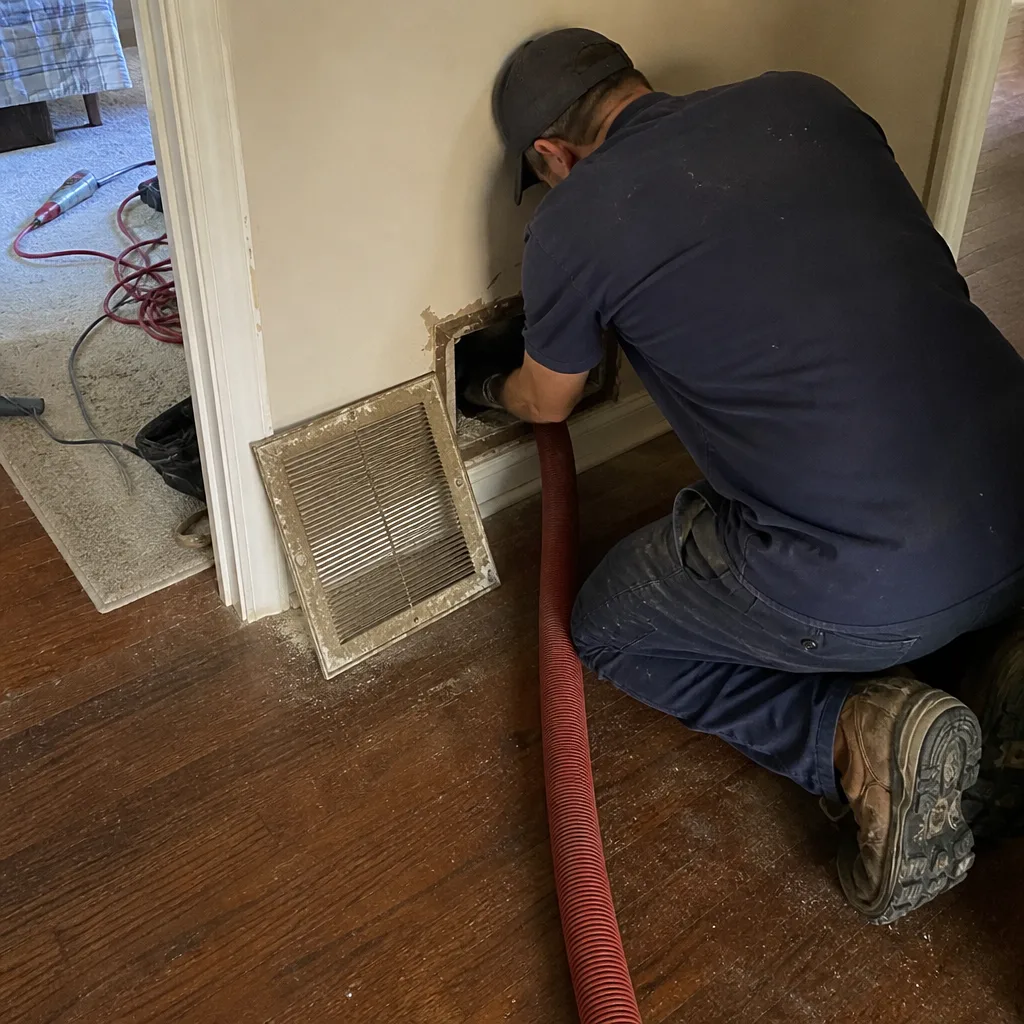 Before
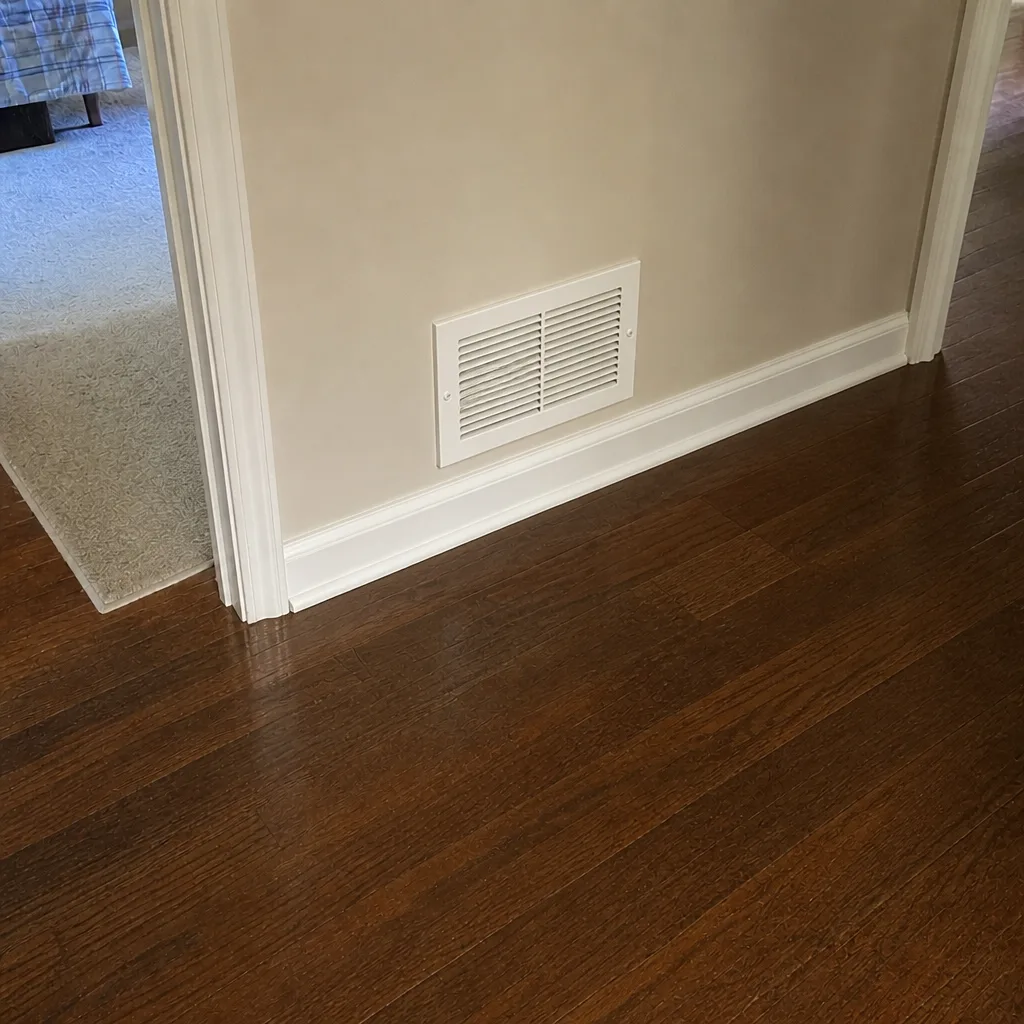 After
When to Call a Professional
Call a professional when cleaning reveals a physical problem with the duct system. A crushed run, a disconnected joint, a sagging flex duct in the attic, or a trunk line that no longer lines up is a repair question, and it needs a technician who can make the call on site rather than a cleaner who’ll sweep it under a register. Call when there’s visible mold inside the ducts, since that’s remediation territory and not cleaning. Call when you’re a property manager with a commercial building and you need a written scope and permit documentation. Call when the dryer vent run is long, clogged, or discharging into a restricted space. And call when you’re buying or selling a Norfolk home and you need the duct system looked at honestly before paperwork changes hands. Our technicians have up to 14 years of experience, and our process uses Rotobrush and Nikro equipment so debris is captured rather than pushed back into the living space. Duct Cleaning Norfolk offers free estimates in Norfolk. Call (833) 519-7500. We answer 24/7. Fast dispatch from 7am to 7pm, Sunday through Friday.
Frequently Asked Questions
Routine air duct cleaning in Norfolk does not require a building permit. The cleaning of an existing duct system without altering its configuration falls under maintenance, and no permit or inspection is involved. The moment the work involves cutting into the duct system, adding branches, replacing sections, or changing the routing, the permit question changes and a mechanical permit is typically required. Call (833) 519-7500 if you want to talk through whether your specific job crosses that line.
The licensed mechanical contractor pulls the permit for duct repair. It’s their responsibility under the Virginia Uniform Statewide Building Code, and it should be part of their quoted price. If a paid contractor asks you to pull the permit yourself as the homeowner, that shifts liability to you and is a reason to find a different contractor. Ask for the permit number in writing before work starts. Call (833) 519-7500 for an estimate on duct repair and we’ll walk through the scope.
Nothing. Virginia’s Indoor Clean Air Act is a smoking-related statute that governs indoor public spaces and does not mandate duct cleaning on any schedule for homes or commercial buildings. The industry standard is to clean when there’s a documented reason, such as visible contamination, recent renovation, water intrusion, or pest activity. Any duct cleaner claiming the act requires scheduled cleaning is misusing the statute. Call (833) 519-7500 for an honest assessment of whether your system needs cleaning.
There’s no single honest number because it depends on the size and layout of the system, how many supply and return runs there are, and whether repair is needed. We don’t quote per vent, and we don’t quote a teaser figure, because the final price is set by the written estimate after we’ve looked at the system. What we will tell you is that any quote much lower than the rest is almost always going to grow during the visit, and you should ask what’s excluded before booking. Call (833) 519-7500 for a free estimate.
Request the city inspection record from the permitting department and match the address, permit number, and inspection date to the work performed. In Norfolk, mechanical inspections are documented through the Department of Planning and Development. Keep those records in the property file. A contractor who expects to pass will provide the documentation without friction, and a contractor who’s skipping the inspection almost never will.
Often, yes. Cleaning and repair are separate scopes, and whether they can happen on one visit depends on what the system needs and whether the repair requires a permit and rough-in inspection, which can add a step. We’ll tell you what we’re seeing, whether the repair is permit-dependent, and what the realistic sequence is. Call (833) 519-7500 for an estimate and we’ll walk through it.
The Bottom Line
Cleaning your ducts in Norfolk almost never needs a permit, but the repair work that cleaning sometimes uncovers often does. The distinction comes down to whether the duct system’s physical configuration changes. Routine cleaning inside existing ducts is maintenance. Cutting, replacing, extending, or rerouting ductwork is mechanical work under the Virginia Uniform Statewide Building Code, and that’s where permits and inspections enter the picture. Ask for the permit number in writing before the repair begins, ask who holds the mechanical license, and ask for photos of the work before it’s closed up. Keep the inspection record with your property documents, because a future buyer’s inspector will ask. Virginia’s Indoor Clean Air Act doesn’t mandate cleaning on any schedule; the right time to clean is when there’s a documented reason. If cleaning reveals mold inside the ducts, that’s a separate remediation question for a licensed remediation contractor. For a straightforward cleaning and dryer vent service, our team uses Rotobrush and Nikro equipment so debris comes out, not back into the room. Call (833) 519-7500. We answer 24/7. Fast dispatch from 7am to 7pm, Sunday through Friday.
Written by the team at Duct Cleaning Norfolk.